Workday limits agentic AI for UK tenants over data rules
Workday updated release notes and its UK pages to say some agentic AI features aren’t available to UK tenants subject to strict data‑processing requirements.
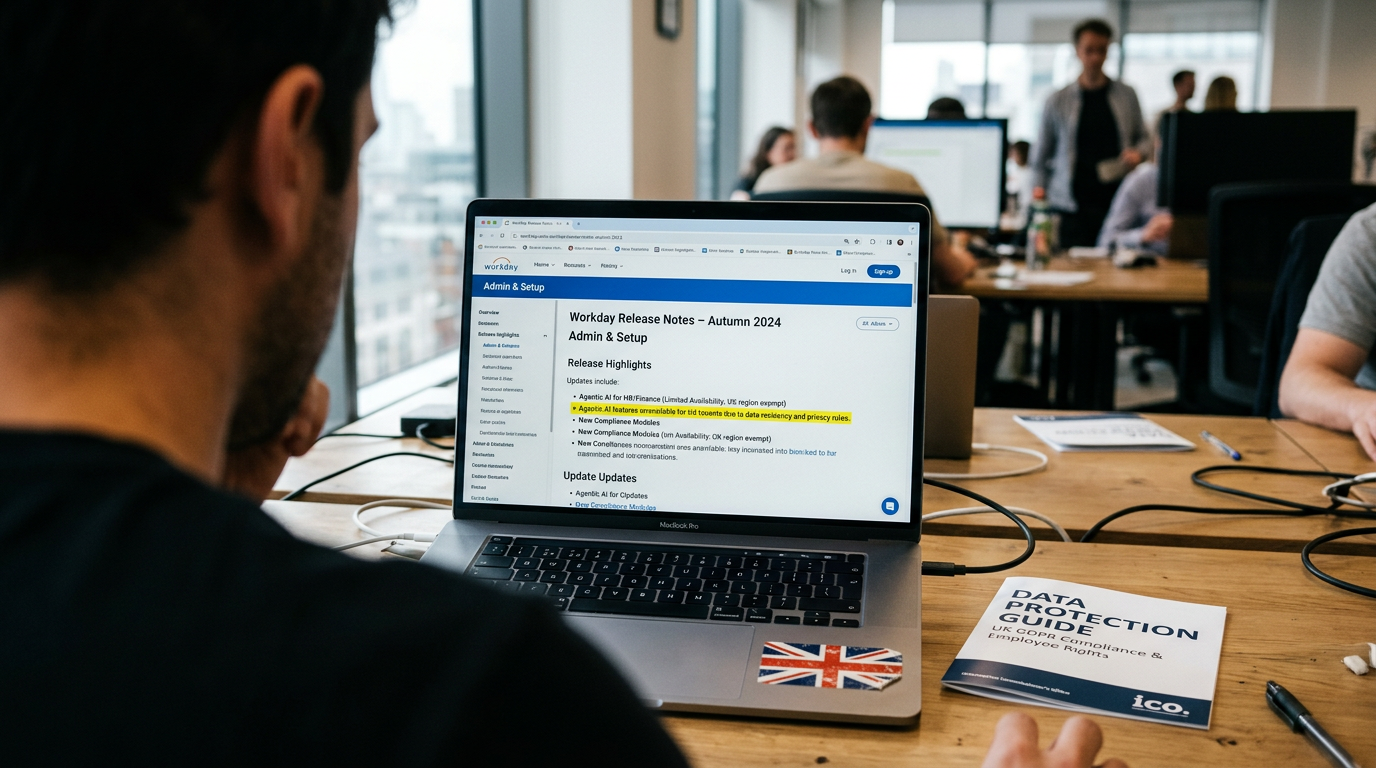
Workday has updated its product release notes and UK pages to warn that some new agentic AI capabilities will not be available to UK tenants subject to strict data‑processing requirements. The change signals commercial and compliance constraints on deploying generative and self‑service AI functionality in the UK market.
In a recent update to its administrator guide release notes, Workday said certain agentic features — described in the notes as agents or self‑service AI — are excluded for UK tenants that fall under strict data‑processing regimes. The company’s UK site was also changed to reflect the limitation, making the regional carve‑out visible to customers searching for product availability information.
The wording in the release notes does not explain which specific agentic capabilities are affected or how Workday determines whether a tenant is subject to the referenced data‑processing requirements. Workday frames the move as a compliance measure: the vendor says availability will vary by tenant jurisdiction and applicable data controls, which has prompted immediate questions from HR teams and software partners about which modules — from hiring and onboarding assistants to people‑operations bots — will be functional in UK deployments.
The update matters for HR systems vendors and enterprise customers because it ties product availability to regional data rules rather than purely commercial licensing. For payroll, benefits administration and core HR platforms that handle sensitive personal data, the restriction could block access to features that automate candidate screening, employee onboarding workflows, or agentic agents designed to act on behalf of users. Procurement and legal teams negotiating contracts with Workday will now need to account for potential functionality gaps tied to UK data‑processing constraints.
The change also intersects with the UK regulatory environment. UK GDPR and guidance from the Information Commissioner’s Office place heightened obligations on controllers and processors when personal data — especially special category or sensitive workforce data — is used in automated decision‑making or profiling. Vendors building generative and agentic tools have already faced scrutiny over data flows, model training, and downstream risk; Workday’s explicit regional carve‑out reflects that scrutiny shaping product choices.
What wasn’t disclosed is equally notable. Workday did not publish a list of the affected agentic features, the precise legal threshold that triggers exclusion, or the technical and contractual remedies customers could pursue. The company did not say whether excluded tenants will receive functional substitutes, whether UK customers can opt in under bespoke data‑processing agreements, or if independent audits or model‑safety certifications are required to restore access.
For HR leaders weighing generative and agentic AI, the episode underscores a broader market shift: vendors are beginning to embed jurisdictional data constraints into product roadmaps rather than treating features as universally deployable. That will complicate vendor comparisons and force tighter conversations between HR, privacy and procurement about acceptable data handling, contractual guarantees, and the operational impact of missing agentic capabilities. As regulators continue to clarify how UK data law applies to emerging AI features, enterprise customers should expect more region‑specific product restrictions and seek clearer commitments from suppliers on how functionality will be delivered or limited in regulated jurisdictions.