Judge Allows Workday AI Bias Claims to Proceed
A federal judge greenlit nationwide class claims that Workday's AI recruiting tools disadvantaged older, Black and disabled applicants and ordered discovery.
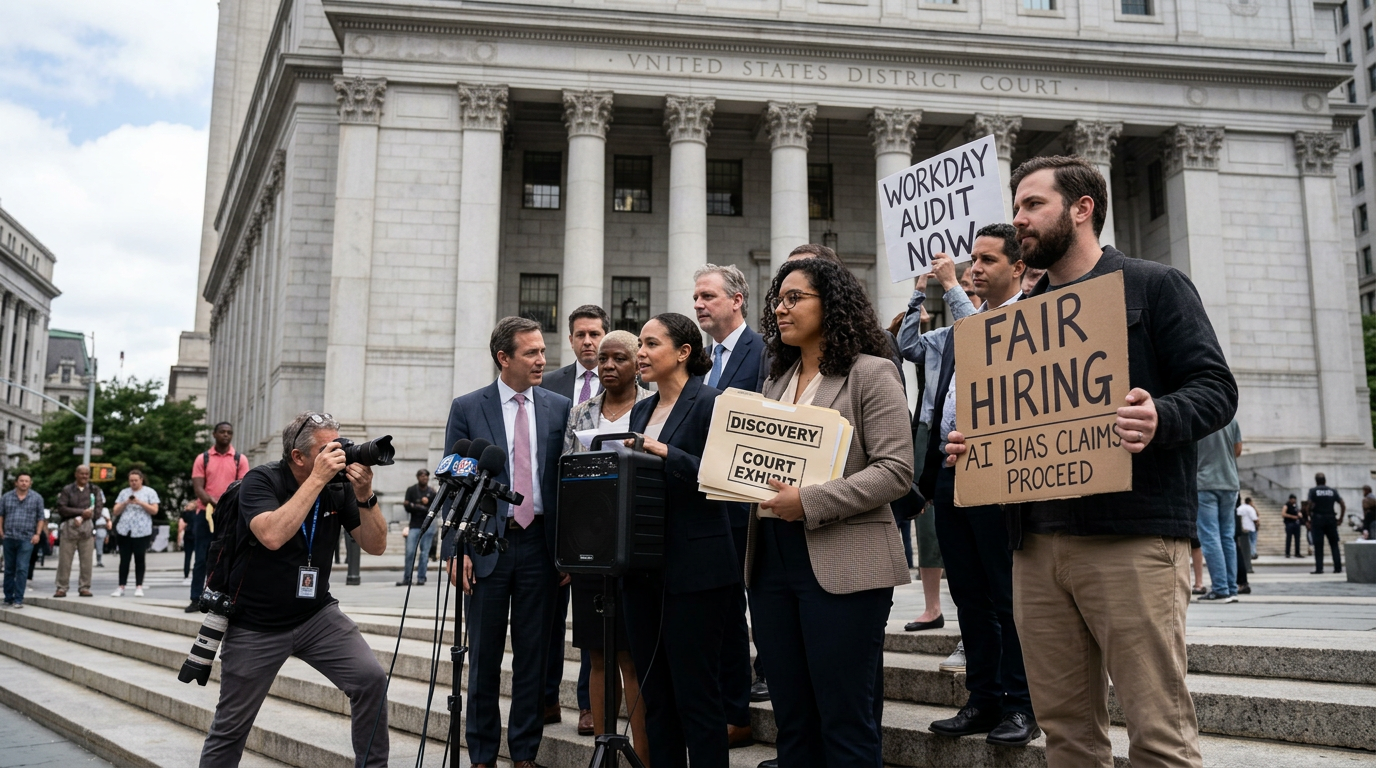
A federal judge has allowed key discrimination claims in a nationwide class-action alleging Workday's AI-powered recruitment tools produced disparate outcomes against older, Black and disabled applicants to move forward, keeping questions of vendor liability and algorithmic bias squarely before the courts.
On July 15, 2026, the court denied portions of Workday's motion to dismiss and authorised discovery that goes beyond contract disputes — ordering production of equal-employment-opportunity (EEO) data and materials related to bias testing and validation of the vendor's screening algorithms. Plaintiffs say the company’s automated systems screened out qualified candidates on the basis of age, race and disability, and the judge concluded there are factual disputes that must be resolved at summary judgment or trial.
The suit, filed as a nationwide class action, challenges how Workday’s recruiting suite automatically parses resumes, scores applicants and surfaces candidates to employers. Plaintiffs’ filings in the Northern District of California argue the tools produced statistically disparate outcomes for older applicants and Black and disabled jobseekers, and they have demanded discovery designed to test those statistical claims. The court order on the docket required defendants to produce the kinds of test data and internal evaluations that typically sit behind compliance certifications.
Workday has pushed back in court filings, arguing that its products operate as neutral software platforms and that discrimination claims hinge on employer use rather than the vendor’s code. The company also urged the court to limit discovery on trade-secret grounds, but the judge narrowed that protection to permit targeted production of bias audits and EEO-related outputs. Those rulings keep alive questions about when and how a vendor can be held responsible for downstream hiring decisions made by customers.
The decision arrives as legal scrutiny of hiring algorithms intensifies. Regulators, plaintiff attorneys and academics have sharpened focus on automated screening after a string of complaints and investigations in recent years, and judges are increasingly willing to demand the internal testing and datasets that vendors long treated as proprietary. For HR leaders, the case highlights a practical tension: many applicant‑tracking systems are positioned as enabling efficiency, but the underlying models and training data can create legal exposure if they produce uneven impacts across protected groups.
What remains unclear is how much of Workday’s technical trail the court will ultimately make public. The discovery orders require production of bias-testing materials, but they also preserve confidentiality procedures and trade-secret redactions. Workday has not published independent third‑party certifications of its models’ fairness or a public description of its validation protocols; the filings reveal only that internal audits exist and that both sides dispute their interpretation. The names of customers whose data may be implicated and the exact model architectures and training datasets also remain shielded, at least for now.
The ruling could reshape how employers bid, buy and audit hiring tools. If plaintiffs obtain internal model evaluations and EEO outputs showing systemic disparities, vendors may face pressure to share more transparency and to harden audit trails; employers could become more cautious about default screening settings and demand contractual protections. The case also signals a broader legal test: courts will weigh vendor responsibilities against employer control in the deployment of automated hiring technology.
As the litigation proceeds through discovery and likely expert statistical battles, HR teams and procurement leads should expect increased demands from legal and compliance teams for documentation of vendor audits, validation protocols and the demographic impacts of screening rules. The unfolding Workday case promises to be a bellwether on whether U.S. courts will require deeper disclosure of the algorithmic mechanics that now shape candidates’ access to jobs.