SRA warns solicitors over AI misuse
The Solicitors Regulation Authority warns solicitors about fabricated AI citations and confidentiality risks as LexisNexis flags expanded right-to-work penalties from 1 Oct 2026.
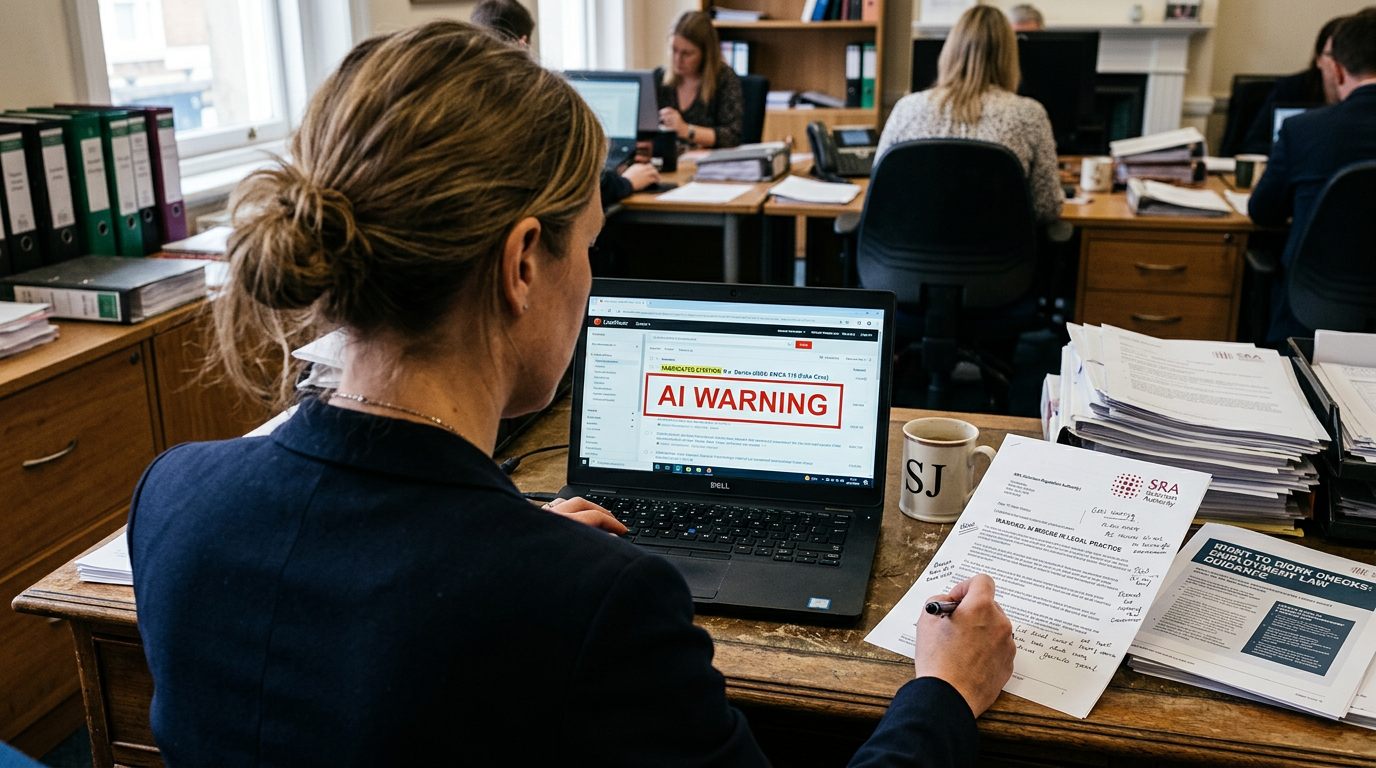
The Solicitors Regulation Authority has issued a formal warning to solicitors about the risks of misusing generative AI in legal practice, highlighting fabricated case citations and confidentiality breaches as key dangers. The SRA’s guidance urges lawyers to treat AI outputs with scepticism and to implement safeguards when using tools that generate text or legal references.
Published on 20 August 2026, the guidance calls out specific failure modes: AI systems producing bogus case law or statutory citations that can mislead practitioners, and automation that exposes client data through inadequate controls. The regulator says firms must ensure that any AI-assisted work meets existing professional duties on competence, confidentiality and accuracy.
LexisNexis’ employment-law roundup the same day flagged the SRA notice alongside a cluster of impending UK employment-law changes that will matter to HR teams. Most prominently, the roundup highlights the expansion of the right-to-work civil penalties regime, which LexisNexis notes will take effect on 1 October 2026 and extend the civil sanction framework employers already use to check immigration status.
The convergence of the SRA warning and the employment-law update underlines an emerging enforcement environment in which regulators are emphasising both technological risk and compliance risk. For employers and HR teams, the two strands intersect: recruitment and onboarding increasingly rely on digital tools that may process personal and identity information, while regulators tighten expectations around how information is verified and handled.
The SRA frames its advice around existing regulatory duties rather than creating new rules. It recommends firms carry out risk assessments, train staff on the limits of generative models, and put verification steps in place before relying on AI‑produced legal material. The regulator also highlights the need to consider data‑protection obligations where client information is input into third‑party models.
LexisNexis’ update points to other practitioner guidance and enforcement activity referenced in the same cycle, including material from the United Kingdom Financial Intelligence Unit and anti‑money‑laundering guidance that touches on recruitment checks and disclosure processes. Taken together, the sources suggest managers responsible for hiring, compliance and legal oversight will need to refresh policies that bridge HR processes and professional regulatory duties.
What wasn’t disclosed is how regulators intend to enforce AI misuse in practice. The SRA stops short of prescribing specific technical standards, certification schemes or mandatory audit regimes for AI tools; it also does not attach new disciplinary sanctions to particular AI behaviours beyond the existing professional obligations firms already face. LexisNexis’ roundup flags the expanded right‑to‑work penalties but does not set out operational detail on how employers should alter checks or what additional documentation will be required after 1 October.
That absence of granular enforcement mechanisms leaves a window for firms to shape their response: legal teams should translate the SRA’s principles into concrete procedures, while HR and compliance should coordinate on recruitment vetting, secure handling of personal data and staff training on AI limitations. As regulators signal growing scrutiny of generative models in professional settings, employers will need to treat AI governance as part of routine compliance work rather than as a separate technology project.