SIPTU ballots public‑service strike action over AI use
SIPTU says members voted overwhelmingly for public‑service industrial action and demands consultation, transparency and safeguards on AI in the workplace.
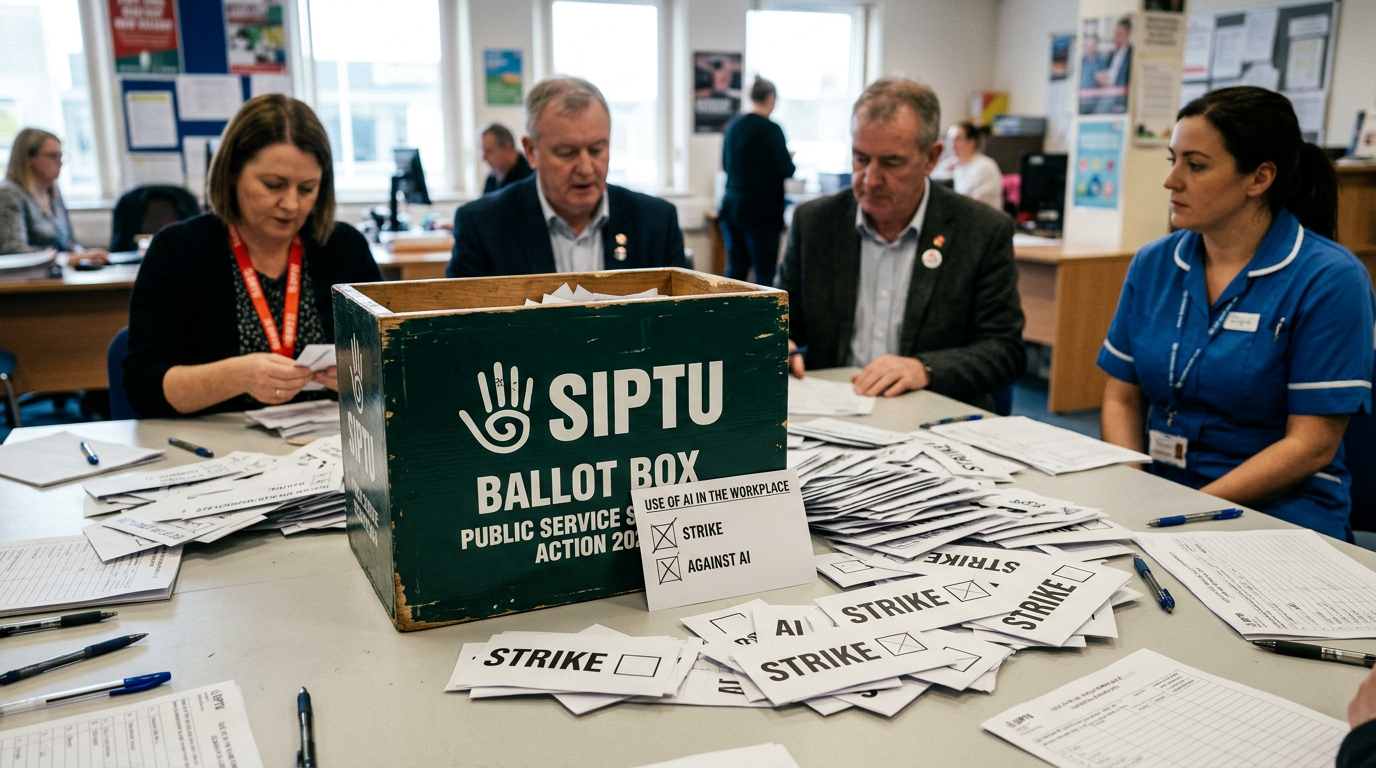
SIPTU announced that its members have voted overwhelmingly in favour of industrial action across the public service and warned the growing use of artificial intelligence risks replacing human judgement in work that affects pay, conditions and management.
The union said on 31 August 2026 that ballots returned a decisive mandate after what it described as the government's failure to enter talks. SIPTU set out demands for formal consultation, full transparency and concrete safeguards where AI systems are used to make or inform decisions on recruitment, rostering, workloads, performance management or other employment conditions.
The vote marks a clear, sector‑specific application of industrial leverage to algorithmic management. SIPTU cast the dispute squarely as one about how automated systems are introduced and governed in the public service, insisting collective bargaining must now cover not just pay and hours but the rules and oversight for any technology that affects workers' jobs.
The move comes amid broader European activity to regulate high‑risk AI. The European Union's AI Act targets systems that have significant impacts on people’s rights and safety and will place new obligations on providers and deployers of certain tools. SIPTU framed its demands as complementary to that regulatory trend, arguing workplace agreements should guarantee consultation and human oversight where AI touches employment decisions.
Unions across Europe have increasingly sought contractual protections against so‑called algorithmic management, but SIPTU's ballot is notable for tying those demands to a formal industrial mandate in an EU member state and for the explicit list of workplace domains it says must be protected. The union did not publish detailed turnout figures or the precise majority margin in its public announcement, saying only that members had voted "overwhelmingly" in favour.
What SIPTU has not detailed is the precise form its demanded safeguards should take. The union stopped short of specifying whether it wants legally binding clauses requiring independent algorithmic audits, mandatory human‑in‑the‑loop provisions, sectoral standards for transparency, or new statutory rights. It also did not provide a timetable for when strikes might be called or which grades and departments in the public service would be affected first.
The government has been criticised by the union for failing to enter talks, but there has been no public response from ministers in SIPTU's announcement. How public‑service employers will respond—whether by opening collective negotiations on technology use or by contesting the union's claims in the run‑up to industrial action—remains uncertain.
For HR leaders and public employers, the ballot signals a shift in what counts as negotiable at the bargaining table: algorithmic systems are now squarely within the scope of collective workplace disputes. If employers refuse to engage, unions with strong mandates may push AI governance into formal negotiations, potentially shaping practices such as transparency, auditability and human oversight ahead of national implementation measures under the EU's AI framework.