Remesh: 43% of workers say they have no voice in AI rollout
Remesh field study finds 43% of US and UK workers say they were not consulted or only informed about employer AI adoption, raising trust and labour risks.
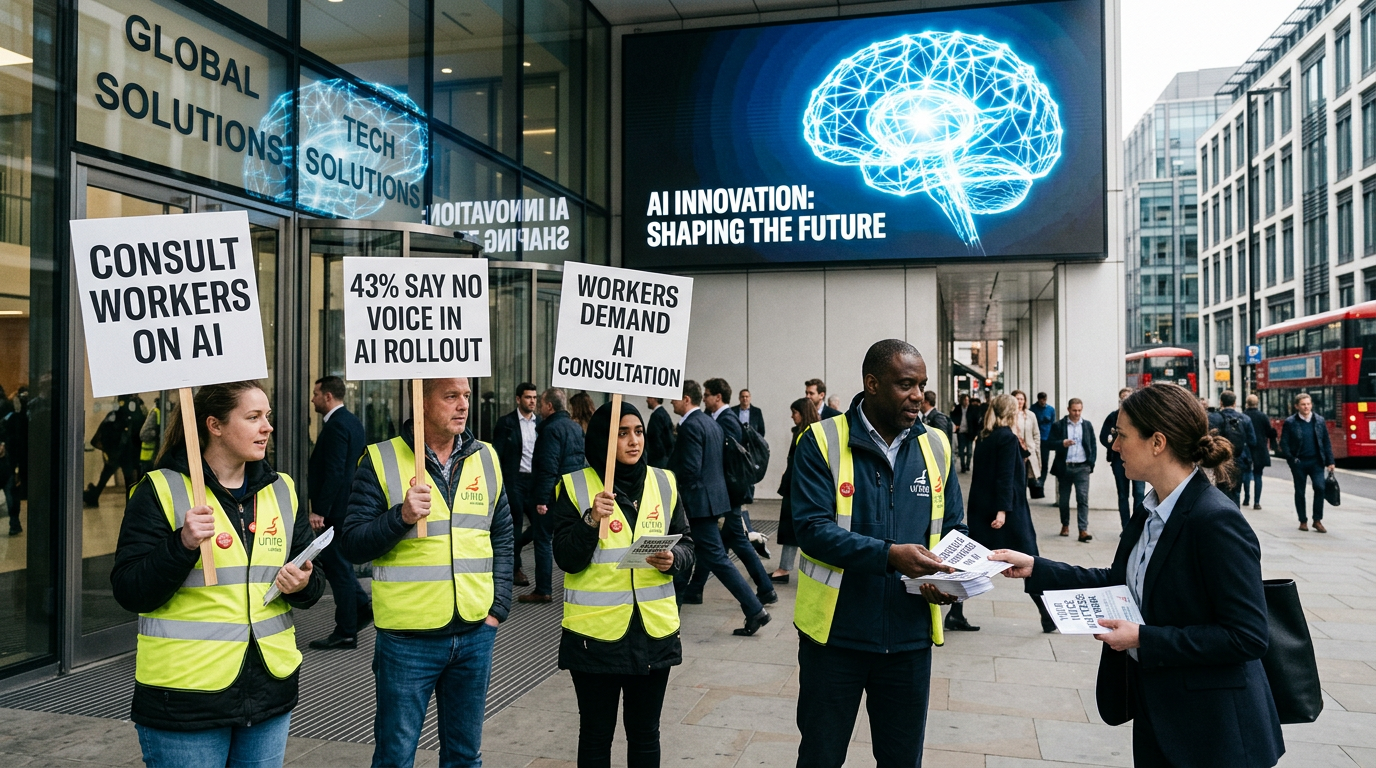
Remesh this week released a field study that found 43% of surveyed workers in the U.S. and U.K. say they were either not involved or only informed — not consulted — about their employer’s AI integration plans.
The company published the study on Aug. 19, 2026, reporting the figure as a warning sign for HR teams and technology leaders. Remesh frames the result as evidence that many organisations are deploying generative and other AI tools without substantive worker engagement, a gap the vendor says could undermine adoption and employee trust.
The study’s headline finding sits alongside other claims in Remesh’s summary about employee sentiment: workers who feel excluded are more likely to express mistrust and resistance to AI-driven changes to tasks, performance measurement and monitoring. Remesh argues that those dynamics raise the prospect of slower uptake and potential collective responses — from formal grievances to union organising — if employers do not change course.
HR leaders and in-house counsel are already grappling with the operational and legal dimensions of introducing AI into the workplace. Engagement practices can affect everything from training and redeployment plans to how organisations document decision-making and assess discrimination risk. Remesh’s data, the company says, underscores the need for systematic employee involvement as part of rollout playbooks.
The finding comes as workplace AI has become a flashpoint across labour relations and policy circles. Regulators in both jurisdictions have signalled heightened scrutiny of automated decision-making in employment, and unions and worker advocates have stepped up demands for bargaining over how new technologies are used. That context makes employee voice — or the lack of it — not only a cultural issue but a potential regulatory and bargaining one.
Remesh positions the research as a prompt for employers to adopt more consultative approaches, including structured feedback loops and clearer communication about how tools will affect roles. The vendor recommends that organisations map stakeholder concerns early and create channels for ongoing dialogue to reduce friction during implementation.
What the summary does not disclose is important. Remesh’s public synopsis omits detailed methodology: it does not specify the study’s sample size, the industry or occupational breakdown of respondents, or the statistical margins of error. The summary also does not say whether respondents worked for employers that had carried out independent bias audits, impact assessments, or collective bargaining over AI — factors that would affect how the findings should be interpreted.
Those gaps leave open questions for HR teams and researchers who want to translate the headline into action. Without a clearer read on which sectors, job roles or demographic groups feel most excluded, employers risk misdiagnosing the scale and nature of the problem in their own workforces.
As organisations continue to scale AI across recruiting, customer service and back-office functions, the study points to a sharper strategic choice for HR: treat employee engagement on AI as a box to tick, or make it a governance priority tied to legal risk, trust and operational effectiveness. How employers respond over the next year — through bargaining, impact assessments, or revised consultation practices — could determine whether AI becomes a shared productivity tool or a source of workplace contention.