NY Comptroller: NYC enforcement of Local Law 144 ineffective
A Dec. 2, 2025 audit says NYC’s enforcement of Local Law 144 was ineffective, citing misrouted complaints, superficial reviews and unused technical resources.
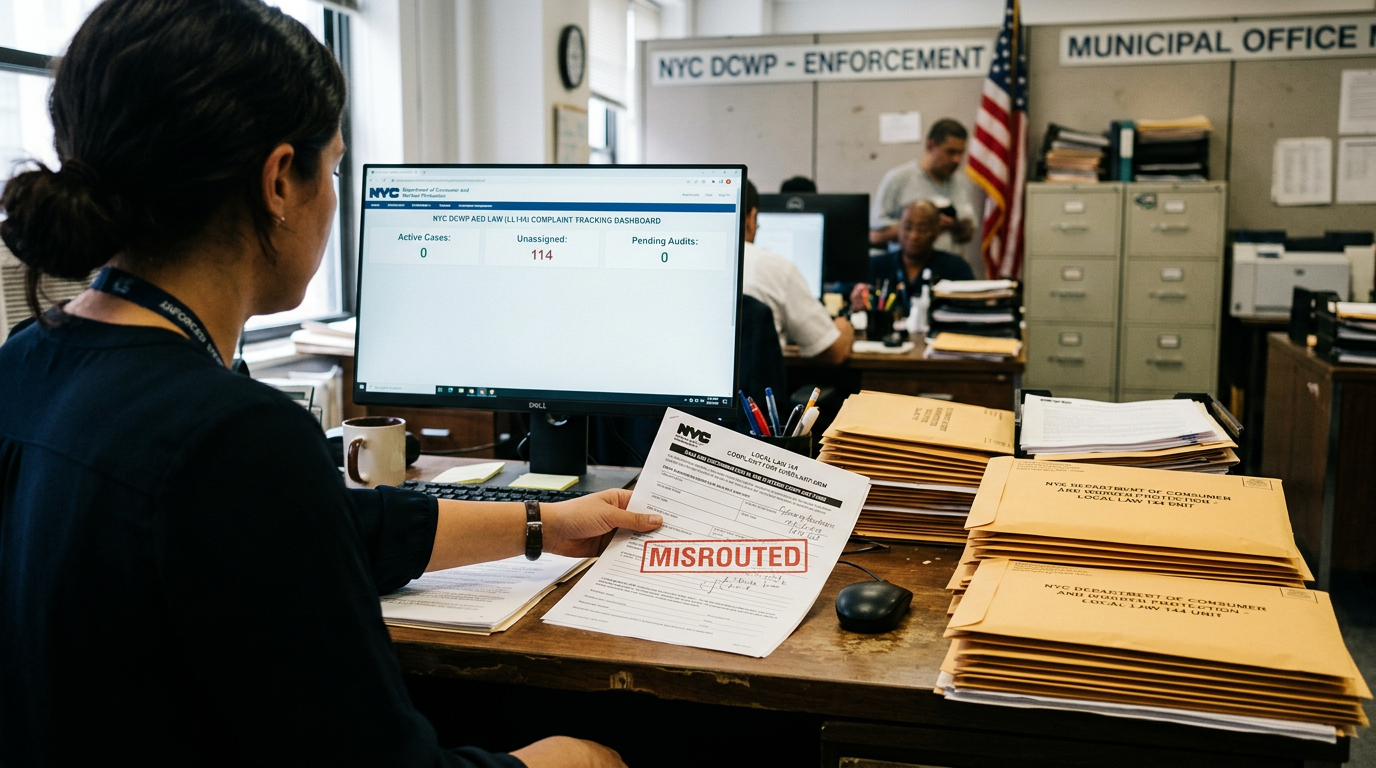
The New York State Comptroller’s Office concluded that the New York City Department of Consumer and Worker Protection’s enforcement of Local Law 144 — the city’s rule governing automated employment decision tools — was "ineffective," the agency wrote in a Dec. 2, 2025 audit.
The audit identified three core shortcomings: complaints routed through the city’s 311 system were often misdirected and not referred to DCWP, compliance reviews were frequently superficial, and the agency failed to make adequate use of available technical resources to assess vendor systems. It recommended a series of proactive enforcement steps to improve triage, investigative capacity and technical evaluation.
Local Law 144 requires employers using automated hiring tools to post notice, obtain and make available a bias audit performed by an independent auditor, and keep records of how those tools are used. The law and its implementing rules are widely regarded as one of the earliest municipal attempts in the U.S. to impose operational transparency and bias-testing obligations on hiring technologies.
According to the audit, the 311 misrouting problem reduced DCWP’s visibility into potential violations. Complaints about automated hiring tools that could have triggered investigations were redirected to other agencies or lost in the system, meaning DCWP did not receive or open many matters that, on paper, fell within its authority. That gap, the comptroller said, limited the department’s ability to identify patterns of non-compliance or to prioritize cases for deeper review.
On substance, the report found that DCWP’s compliance checks tended to rely on documentation provided by employers and vendors rather than on independent technical review. The office said reviews often examined paperwork and attestations but lacked the deeper algorithmic testing and source-data inspection that would reveal whether a tool produced disparate outcomes. The audit also faulted the department for failing to deploy or coordinate with technical specialists who could have assisted in assessing complex vendor systems.
The comptroller urged DCWP to adopt more proactive enforcement: improving 311 referral practices, expanding technical capacity — whether through hiring or contractor arrangements — and initiating targeted audits rather than waiting for complaints to surface. In its formal response to the audit, DCWP said it agreed with the findings and committed to implementing many of the recommendations, including changes to complaint triage and plans to strengthen technical review, according to the audit document.
The audit lands at a formative moment for employers and talent-technology vendors. Local Law 144 has been a compliance focal point for companies operating in New York City and for vendors marketing automated decision tools to those customers. Regulators and legislatures across the U.S. and Europe have been tightening scrutiny of AI used in hiring, and the comptroller’s findings signal that municipal enforcement could become more interventionist — raising the likelihood of inspections, requests for source materials and demand for independent technical evidence.
The audit does not, however, include a public accounting of enforcement outcomes to date: it does not enumerate prior investigations, penalties imposed under Local Law 144, or specific vendor products the department has tested and found deficient. DCWP also has not published a detailed timeline or resource plan showing how it will scale up technical capacity and handle an expected growth in referrals.
For HR leaders and vendors, the comptroller’s report is a practical marker: transparency and documentation alone are unlikely to be enough. The combination of improved triage and more technically grounded reviews will increase exposure for employers and their software suppliers, and it shifts the compliance burden toward demonstrable, technically backed auditability. The audit suggests New York City intends to move from a largely reactive posture to a more assertive supervisory role over how automated hiring tools are governed and evaluated.