Munich court blocks Suno AI use of copyrighted songs
Munich court finds Suno AI infringed music copyrights, orders injunctions and disclosure and rejects TDM and AI‑Act defences.
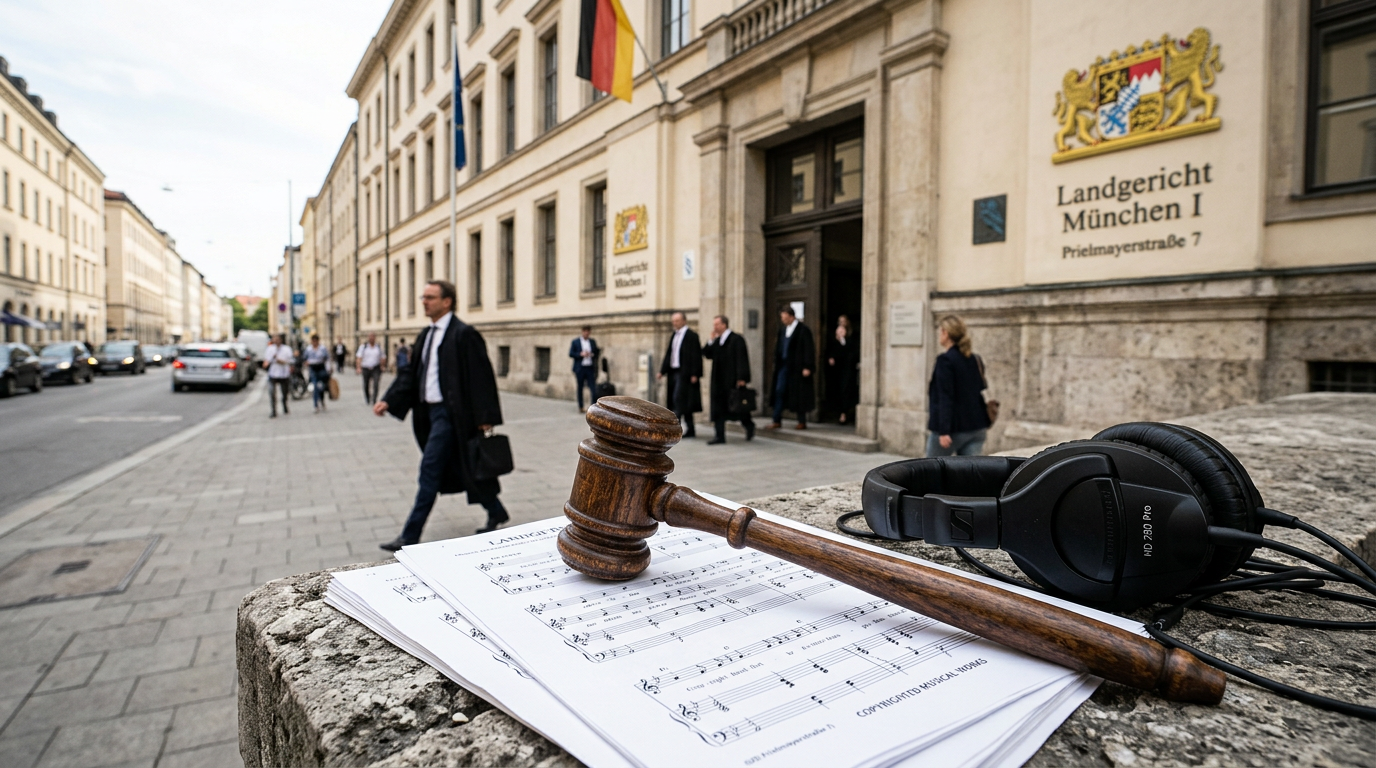
A Munich court has found that Suno AI’s use of copyrighted musical works in training its generative model led to “memorisation” and recognisable reproductions, and granted injunctive relief that bars the company from using those works for training and from producing certain outputs recreating them.
On August 22, 2026, the Munich District Court ruled in GEMA v Suno AI that the German collecting society’s repertoire had been used in a way that produced outputs sufficiently similar to original works to infringe copyright; the court ordered Suno to stop using the works for model training, to cease making reproductions that reproduce original pieces, and to provide disclosure about its training materials and outputs. The court left open the assessment of monetary damages for a later stage of proceedings.
The judgment singles out what the court calls “memorisation” — the model’s tendency to reproduce substantial, recognisable portions of copyrighted tracks it was trained on — and treats that reproduction as actionable. The court also rejected Suno’s invocation of a text‑and‑data‑mining (TDM) exception as a defence and declined to accept compliance with the EU AI Act framework as a shield against copyright claims, according to legal analysis by Simmons & Simmons.
Judges ordered disclosure measures designed to let GEMA test whether particular outputs matched identified works and to trace the training data that produced them. The scope and technical detail of the disclosure were not fully specified in the public reporting, and the court deferred determination of damages and certain detailed remedies to later steps in the case.
Legal advisers and market observers say the ruling tightens copyright risk for generative‑AI providers working with music and audio. Simmons & Simmons describes the decision as a “key EU decision” that could force vendors to reassess licensing, curation and documentation of training corpora. Industry briefings covering the ruling note that providers who offer audio generation or music‑style synthesis will face greater pressure to secure licences or to demonstrate that outputs cannot be traced to specific copyrighted material.
The decision arrives amid broader regulatory scrutiny of AI training practices in Europe. Regulators and courts across the EU have been pressing for greater transparency about datasets and for stronger vendor accountability; by refusing to accept TDM and AI‑Act compliance as categorical defences, the Munich court signals that compliance with one regulatory regime does not automatically resolve intellectual property risk.
Several concrete elements remain unresolved in public filings. The judgment does not set out a bright‑line technical test for when a generated output is sufficiently “recognisable” to infringe, nor does it specify the precise scope or timeframe for disclosure obligations. The court also left damages to be quantified later, and it did not address how the injunction will be enforced beyond Germany or how it applies to model updates, derivative models or outputs already in circulation.
For HR and talent‑technology teams that evaluate or deploy generative audio tools, the ruling changes vendor risk profiles. Employers that licence voice cloning, music‑style composition or audio‑based training tools should expect vendors to supply provenance documentation, licensing assurances and contractual indemnities; vendors that cannot produce clear evidence of lawful training data may become difficult to onboard. Procurement and legal teams will likely prioritise vendors that offer auditable data lineage and licensing terms that explicitly cover employee use cases.
The Munich decision is likely to ripple beyond this single case: by treating memorised outputs as actionable copying and by ordering disclosure, it raises the bar for how generative models must be trained and documented in Europe. That shift will shape how providers build and market audio generation features to businesses — and how employers assess the legal footprint of introducing those features into the workplace.