Judge allows key discrimination claims against Workday to proceed
A California federal court denied major dismissal bids in Mobley v. Workday, preserving disparate‑impact and age claims over Workday’s AI hiring tools and opening discovery.
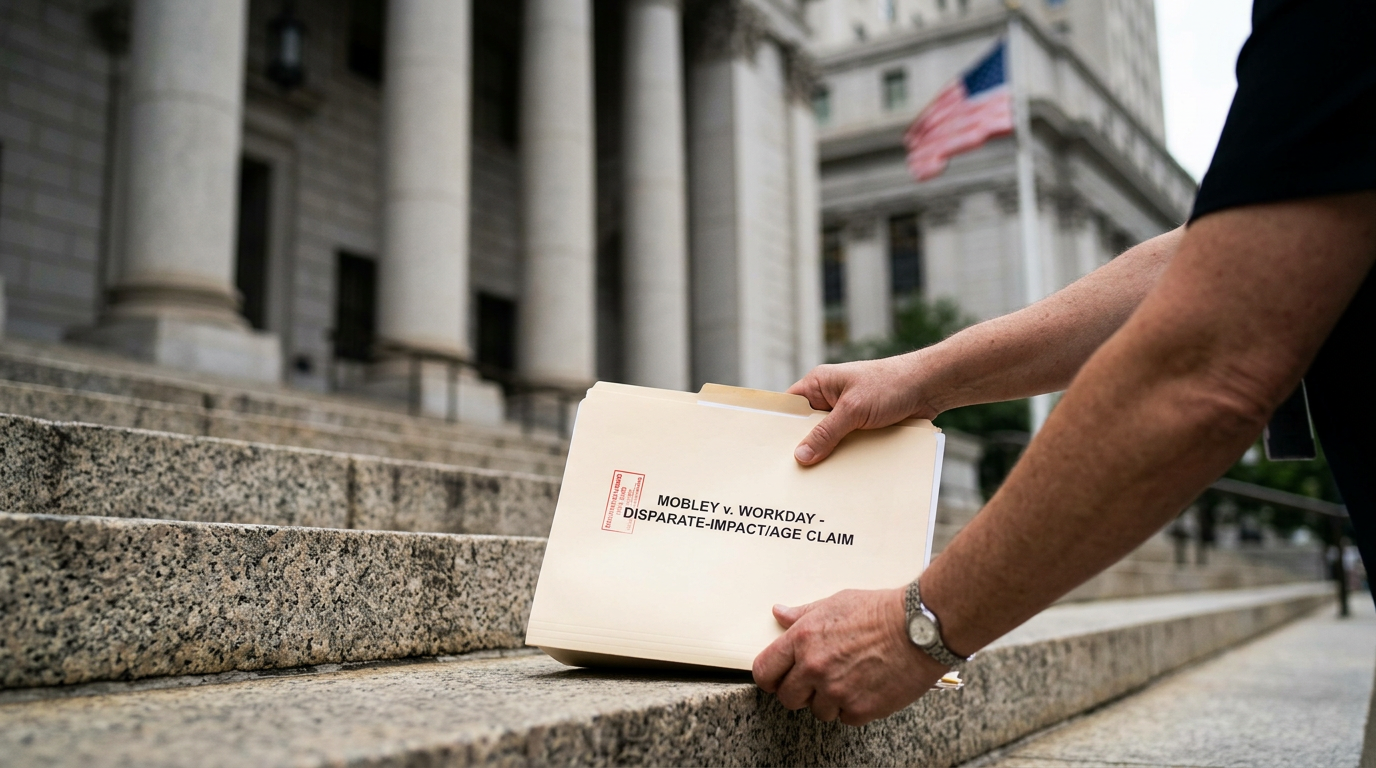
A California federal court on Wednesday largely denied motions to dismiss in Mobley v. Workday, allowing plaintiffs’ disparate‑impact and age‑discrimination claims over Workday’s AI‑powered applicant‑screening tools to proceed and clearing the way for expanded discovery.
In a June 2024 ruling, the court kept in place core allegations that Workday’s algorithmic screening products disproportionately exclude older applicants and produce other group‑level harms, while rejecting portions of the company’s bid to limit the scope of the lawsuit. The decision also permitted plaintiffs to pursue class treatment for at least the age‑discrimination claim, a development Bloomberg Law reported as giving the case potential nationwide reach.
The complaint, filed under the title Mobley v. Workday, targets Workday’s recruitment and applicant‑screening modules that plaintiffs say are powered by automated decisionmaking. Plaintiffs argue the vendor’s tools systematically filter candidates in ways that have a disparate impact on older workers and on other protected groups. Workday had urged the court to toss or narrow those claims, arguing that plaintiffs failed to plead the sort of concrete, statistical showing courts require for disparate‑impact theories; the court disagreed in several respects and allowed discovery to test the allegations.
The broader discovery order is notable: the court authorized plaintiffs to seek information about model design, training data, performance testing, and any internal audits or validation that Workday — or clients using its tools — performed. Legal filings reviewed by analysts and law firms indicate the judge viewed those materials as potentially central to resolving whether the screening systems impose group harms, rather than mere isolated errors.
Workday said it will defend the product and the company vigorously in court. The vendor has previously described its tools as designed to help employers make fairer, more consistent hiring decisions and has pointed to internal controls and testing. Plaintiffs’ counsel said the ruling vindicates their position that systemic, algorithmic processes require robust fact‑development before liability can be resolved.
The decision lands as litigation and regulatory scrutiny of hiring algorithms has increased. Civil‑rights groups, state attorneys general and private plaintiffs have mounted several challenges to automated hiring tools in recent years, arguing the technology can replicate or magnify historical bias unless vendors and employers implement rigorous safeguards. For HR leaders, the case highlights mounting pressure on talent platforms to show not just the business utility of automation but demonstrable steps to measure and mitigate disparate outcomes.
What remains unclear in public filings is the full operational detail of Workday’s screening systems and the extent to which employer customers configure or control model parameters. The court’s order allows plaintiffs to probe those gaps, but Workday has not publicly disclosed comprehensive information on model training sets, third‑party data sources, or the results of any independent bias audits. It also has not made public whether the company provides customers with specific contractual indemnities or mitigation tools tailored to disparate‑impact risk.
The ruling could reshape vendor and buyer behaviour in the HR tech market. If discovery yields evidence that common screening approaches produce statistical disparities, vendors may face pressure to alter model development, expand documentation, and accept broader contractual audit rights; employers that deploy such tools might confront heightened compliance obligations under federal and state anti‑discrimination law. For HR teams already weighing automated screening for efficiency, the case underscores that legal exposure is becoming a core part of procurement and governance conversations.
As the litigation moves into fact‑gathering, its outcome will test how courts balance algorithmic complexity with traditional anti‑discrimination frameworks — and whether plaintiffs can use discovery to demonstrate systemic effects at scale. That combination of doctrinal stakes and practical consequences makes Mobley v. Workday a bellwether for how algorithmic hiring will be litigated and contracted in the years ahead.