Judiciary updates interim‑relief guidance amid rise in AI‑assisted tribunal claims
The Presidents of the Employment Tribunals issue June 2026 guidance warning of more AI‑assisted and complex claims and set expectations for case management and disclosure.
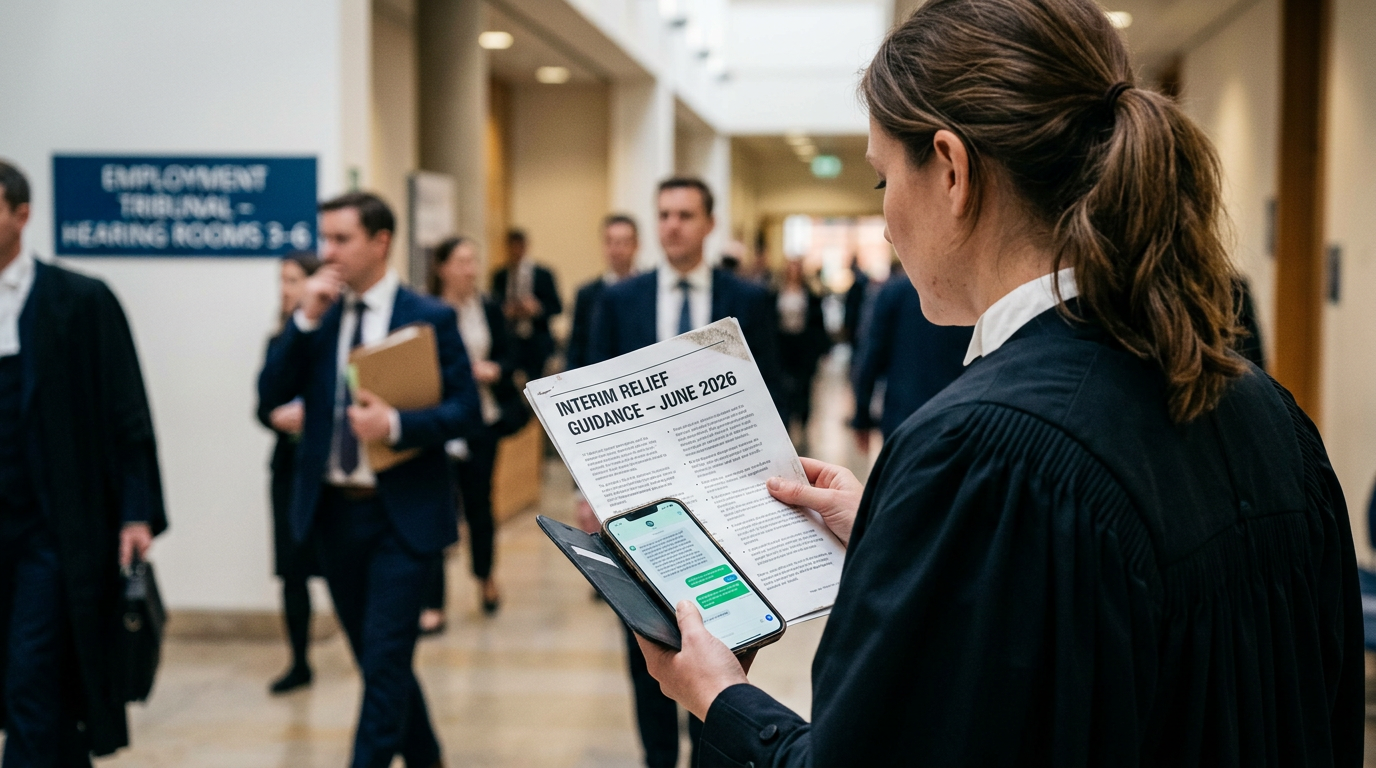
The Presidents of the Employment Tribunals have issued updated presidential guidance on interim relief applications, warning that an increase in AI‑assisted and more complex claims is changing how tribunals must manage urgent employment disputes.
Published in June 2026, the guidance reviews expectations for case management in interim relief hearings and highlights practical steps judges should take when parties rely on automated or generative AI material. It asks tribunals to be ready to probe the provenance and accuracy of evidence where AI tools have been used and to impose targeted timetables to get contested issues before a judge quickly.
The judiciary’s new note follows a string of recent Employment Tribunal decisions published on GOV.UK that flag problems with AI‑generated material, including instances where documents contained misplaced or apparently fabricated citations. Those published decisions show judges are already confronting evidence whose origins and reliability are unclear and are increasingly asking parties to disclose whether and how AI was used in creating documents and witness material.
The guidance is procedural in tone: it reinforces that interim relief remains a high‑threshold remedy and reiterates established case‑management tools — tight directions, short hearings and focused disclosure — while inserting a fresh emphasis on the risks posed by automated evidence. It tells judges to consider whether AI‑produced material requires verification, whether oral evidence needs to address software workflows, and whether expert or forensic assistance is necessary to determine authenticity.
For HR and in‑house legal teams, the message is unambiguous. Parties bringing or resisting interim relief should expect earlier and sharper scrutiny of the evidence they file, including metadata, original files and an explanation of any machine assistance used to generate documents, witness statements or legal arguments. The guidance signals that nebulous references to “AI assistance” will not be sufficient; tribunals will press for concrete disclosure and may draw adverse inferences where provenance cannot be established.
Contextually, the move reflects a wider judicial and regulatory push to adapt civil and employment procedure to a landscape where generative AI is used across recruiting, performance management and disciplinary processes. Employment judges are trying to balance access to justice and speed in urgent cases with a need to guard the integrity of the factual record as parties deploy automated drafting tools and data‑processing workflows.
What the guidance does not do is set technical standards for how to audit AI outputs or mandate any particular form of labelling for AI‑generated material. It stops short of prescribing forensic protocols, independent certification or mandatory disclosure templates, leaving those details to case‑by‑case directions or to future practice development. That gap means litigants and HR teams must still make practical choices about preservation, disclosure and evidential proof without a single, prescriptive rulebook.
Looking ahead, the guidance makes clear that tribunals will not treat AI‑generated material as a neutral procedural novelty: it changes how judges will manage urgency, weigh credibility and frame disclosure orders. Employers and their advisers should expect tighter case management in interim relief applications, be ready to preserve original electronic records and be prepared to explain AI workflows in forensic detail — or risk undermining their position in urgent tribunal hearings.