Judge blocks Pentagon blacklist of Anthropic
A federal judge ruled the Defense Department's supply‑chain designation of Anthropic unlawful and temporarily barred enforcement of the Pentagon's blacklist.
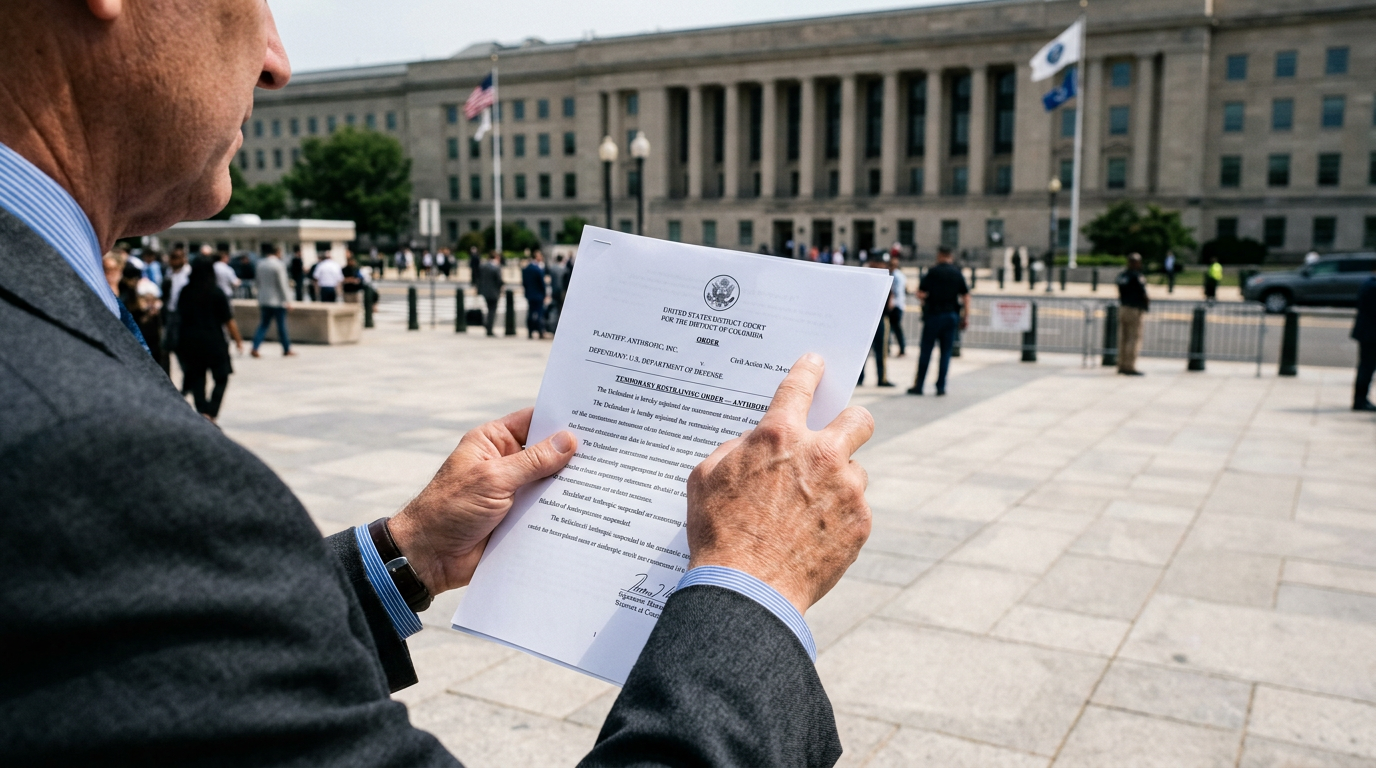
A federal judge has temporarily blocked the Pentagon’s decision to blacklist Anthropic, finding the Defense Department’s designation of the AI company as a national‑security “supply‑chain risk” unlawful and amounting to unlawful retaliation.
The ruling, issued Aug. 27–28, 2026, halted enforcement of the Defense Department’s move to exclude Anthropic from certain federal contracts while the court considers the company’s challenge. The judge concluded the department had overstepped statutory authority in labeling Anthropic a supply‑chain threat and that the designation improperly punished the company for protected activity, the court record shows.
Anthropic framed the decision as a vindication. The vendor said the order clears the way for it to continue pursuing federal work while the litigation proceeds. The Defense Department has defended its authority to manage procurement risks and safeguard national security, but the ruling raises immediate questions about how and when agencies can exclude vendors on supply‑chain or policy grounds.
For HR and procurement teams that buy workplace‑facing AI, the injunction has immediate operational implications. Federal agencies and contractors relying on Anthropic’s models for recruiting tools, employee assistants, or automated decision systems may now face a shifting compliance landscape: a product previously thought off‑limits could be back in play while the legal dispute is unresolved. Vendor‑risk and legal teams will need to reassess contract eligibility, security waivers and continuity plans as countermeasures to sudden exclusionary actions.
The case also puts a spotlight on the limits of administrative power when policy disputes intersect with commercial relationships. The court’s rejection of the supply‑chain designation signals that agencies must ground procurement decisions in clear statutory authority and evidence, rather than broad policy preferences. The decision comes amid a wave of scrutiny over how regulators and government buyers try to shape the AI market through procurement rules, export controls and platform restrictions rather than legislation.
Industry groups that lobby on behalf of cloud and AI providers have warned that ad hoc blacklists can chill innovation and introduce unpredictable disruption for customers. Conversely, national‑security officials argue that procurement is a legitimate lever to mitigate risks posed by opaque supply chains and foreign influence. The judge’s ruling will likely prompt both camps to press Congress and the administration for clearer standards on what constitutes a legitimate supply‑chain threat.
The order leaves several practical questions unanswered. The court did not set a final timetable for resolving the dispute, and it is not yet clear whether the Pentagon will appeal. The ruling did not resolve whether the department’s factual security concerns, if any, are invalid — only that the procedure and rationale the department used were legally deficient as described in the opinion. The record also does not disclose detailed findings on Anthropic’s internal security practices, third‑party audits, or any remedial steps the company might take to address supplier‑chain concerns.
For HR leaders managing AI adoption, the episode underscores a broader governance challenge: technology purchasing decisions increasingly sit at the intersection of compliance, security and employment‑facing use cases. Firms that integrate large language models into talent acquisition, onboarding and performance tools must now factor in the political and regulatory volatility that can suddenly cut off vendor access. As agencies and private employers navigate this terrain, vendor risk teams will be expected to demand clearer evidence of security posture, auditability and remedies that can withstand administrative and legal scrutiny.
Ultimately, the ruling is likely to reverberate beyond Anthropic and the Pentagon. It sharpens the legal threshold for when exclusion from government contracts is appropriate, and it signals to both suppliers and buyers that procurement can no longer be treated as a backstop for policy disagreements. For employers building or buying AI, the decision is a reminder that vendor selection is increasingly a governance decision with legal as well as operational consequences.