Labor Dept: Inflation Eases in June as AI Build-Out Raises New Costs
The Labor Department found inflation cooled in June, but economists warn hundreds of billions in AI and data-center spending is adding pressure to chips, power and hiring.
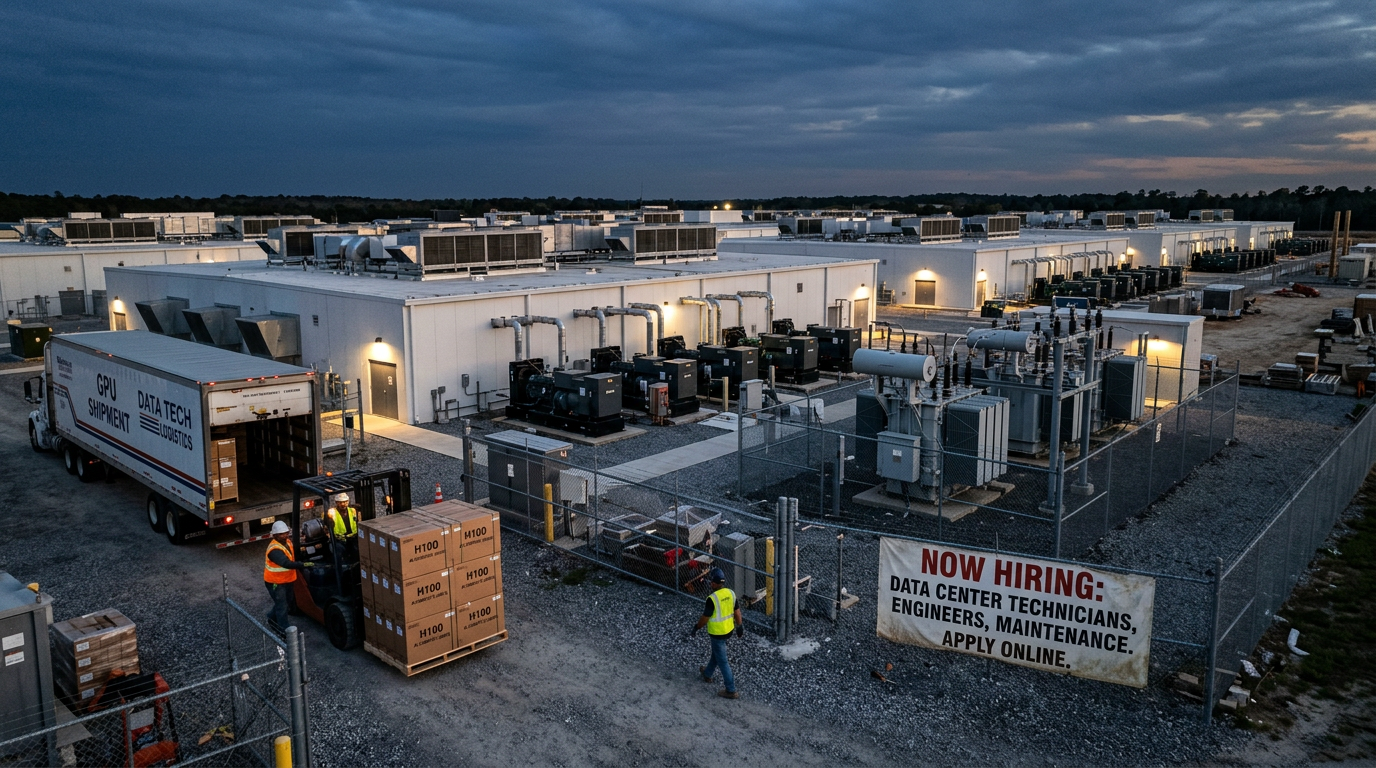
The Labor Department reported that consumer inflation cooled in June, even as economists and industry executives warn a massive national build-out of data centers and AI infrastructure is creating a fresh source of price pressure.
On July 18, the Labor Department's monthly consumer-price snapshot showed a slowdown in headline inflation for June, while measures that exclude volatile food and energy costs remained stickier. At the same time, analysts estimate U.S. spending on data centers, cloud capacity and AI-related hardware and services will reach into the hundreds of billions of dollars this year — a wave of demand that is lifting prices for semiconductors, specialized processors and electricity.
The spending surge is being driven by large cloud providers and enterprise tech buyers expanding capacity to train and run generative models, industry participants say. Chipmakers and power utilities are reporting stronger orders and higher utilisation rates in data-center-heavy regions, which in turn feeds through to component lead times and wholesale power prices.
For HR leaders, the link between these macro moves and workforce strategy is immediate. Higher input costs can squeeze corporate margins even as firms pursue productivity gains from AI, forcing trade-offs between hiring, investment in automation, and targeted redundancy. Economists interviewed by industry outlets caution that if the AI build-out sustains higher inflation or prompts tighter monetary policy, employment growth and corporate hiring plans could slow across sectors that are sensitive to interest rates.
The dynamic already shows up in corporate behaviour. Some companies are accelerating AI projects that promise headcount reductions in routine roles, betting that automation will offset rising operational costs. Others are pausing non-essential hiring and reassigning budget toward cloud and compute contracts. HR teams are therefore confronting a dual pressure: managing immediate cost control while preparing for longer-term shifts in skill demand as firms scale AI capabilities.
Policy makers are taking note. Central-bank officials track core inflation and inflation expectations when setting interest rates; sustained price pressure from a large-scale technology build-out could complicate their path to bringing inflation back to target. That, in turn, has implications for labour markets: tighter monetary policy typically cools hiring and raises the bar for job creation, which can change when and how firms choose to implement AI-driven restructurings.
What isn't yet settled is the pace at which the extra demand for chips and power will abate. Some analysts argue that new supply — additional fabs, alternative chip designs and renewable-project capacity — will moderate cost pressures over time. Others warn that the specialized nature of AI compute, and the short lead times for data-center contracts, mean near-term spikes could persist and intermittently feed into consumer prices.
For HR and talent leaders, the near-term takeaway is practical: workforce plans rooted in stable cost assumptions are at risk. Employers juggling inflation-driven wage pressure, higher input costs and the potential productivity upside of AI will need tighter coordination among finance, IT and HR to sequence hiring, reskilling and redundancy decisions. How companies balance those moves will shape the next phase of labour-market churn — whether AI acts primarily as a cost mitigant or as a catalyst for faster job displacement remains a function of corporate strategy, supply-side responses and policy choices over the coming quarters.