Goldman Sachs: AI curbs U.S. entry‑level hiring
Goldman Sachs analysis finds occupations with higher AI exposure have weaker openings growth, with U.S. entry‑level roles hit hardest.
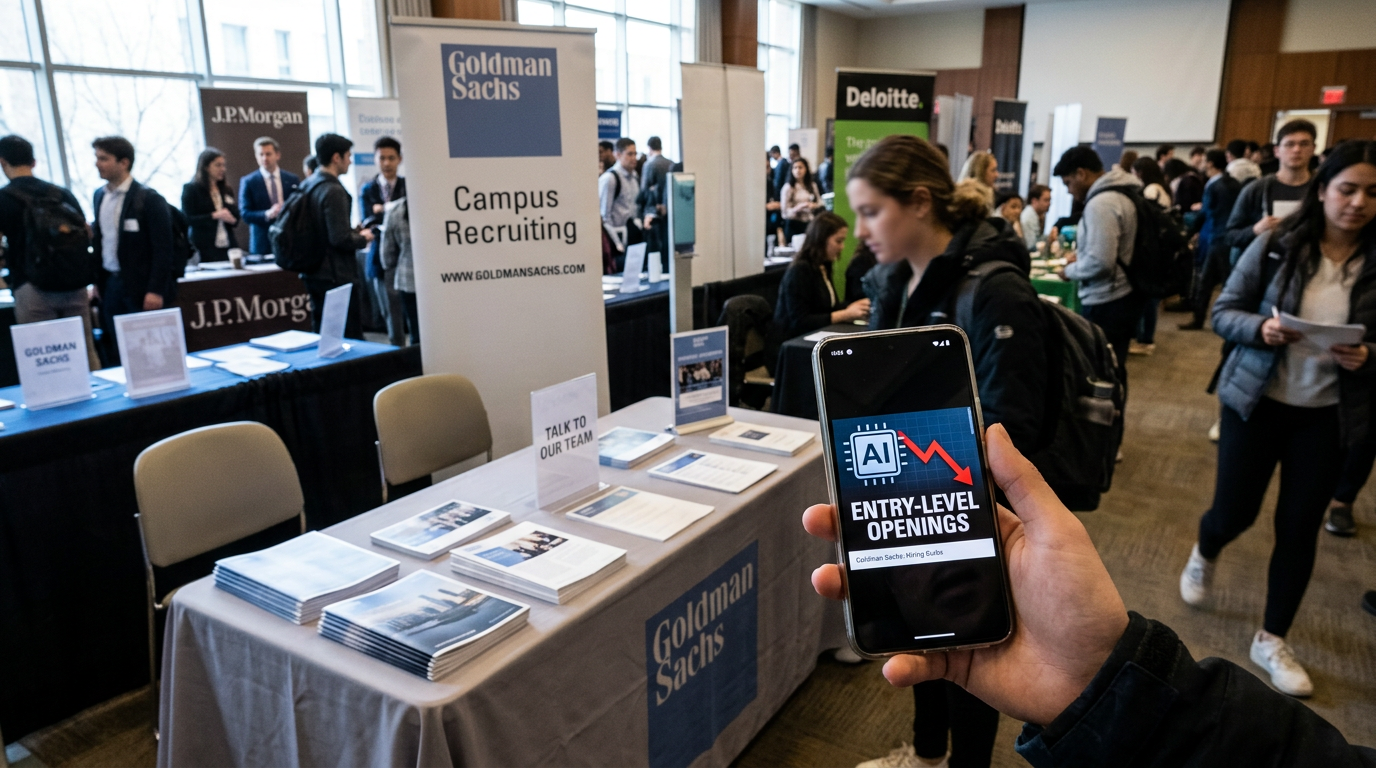
Goldman Sachs economists say their new analysis shows artificial intelligence adoption is linked to weaker job‑openings growth — and that the effect is concentrated among entry‑level roles in the United States.
Published on Aug. 19, 2026, the bank’s note compares measures of occupational AI exposure with changes in openings and employment. Goldman Sachs found that occupations scoring higher on AI exposure have seen slower openings growth, and that early‑career, entry‑level positions have experienced a materially larger “employment drag” than the labour market as a whole.
The authors matched occupational exposure estimates against recent openings data and concluded the headwinds are not evenly distributed across the workforce. While mid‑career and senior roles showed more muted effects, the analysis highlights a sharper decline in hiring flow for roles typically filled by recent graduates, apprentices and trainees.
Goldman Sachs frames the finding as a concentrated, demand‑side shock to hiring pipelines rather than a uniform collapse of hiring: firms appear to be slowing the creation of new starter roles in occupations where AI can substitute routine tasks, while continuing to recruit more experienced candidates for positions that require domain knowledge or supervisory skills.
For HR leaders, the picture complicates early‑talent strategies. Reduced openings for entry positions squeeze internship-to‑permanent pipelines and apprenticeship intakes, forcing talent teams to rethink succession planning and the balance between external early hires and upskilling existing staff. The bank’s analysis explicitly flags implications for workforce planning and talks up the need for targeted reskilling to preserve career ladders.
The finding sits against a broader market backdrop in which employers are increasingly deploying generative and task‑automation tools to streamline routine work. That shift has coincided with heightened debate among policymakers and industry groups over how to finance reskilling, sustain apprenticeships and ensure early‑career mobility as technology changes job content.
Goldman Sachs did not publish a full methodological appendix alongside the note, and the bank’s public summary stops short of several details HR teams will want. The analysis does not include a job‑level list of affected occupations or disaggregate the data by industry, nor does it make public the exact thresholds used to designate ‘‘entry‑level’’ roles. It’s also unclear how the authors controlled for parallel forces such as demographic shifts, regional labour supply changes or sectoral cyclical effects.
Those gaps mean employers and policymakers must treat the headline as an important directional signal rather than definitive proof of causation at the job‑level. Still, the narrative is straightforward: where AI can perform tasks once done by newcomers, firms appear to be creating fewer starter openings, shifting the burden of early‑career experience onto training budgets and internal mobility programmes.
Looking ahead, the analysis amplifies an urgent choice for HR leaders. Organisations can respond by preserving and redesigning entry pathways — converting some roles into hybrid training positions, investing in on‑the‑job reskilling tied to new tooling, or strengthening partnerships with educational and apprenticeship providers — or they can accept a leaner intake of novice hires and rely more heavily on lateral hires and internal promotion. Either path will reshape how careers begin, and how companies steward talent pipelines in an era where AI selectively reshapes demand for labour.