Flock Safety faces Texas backlash over AI license-plate cameras
Counties and residents in Texas are cancelling contracts and vandalising Flock Safety cameras amid privacy concerns, forcing vendors and employers to rethink surveillance near workplaces.
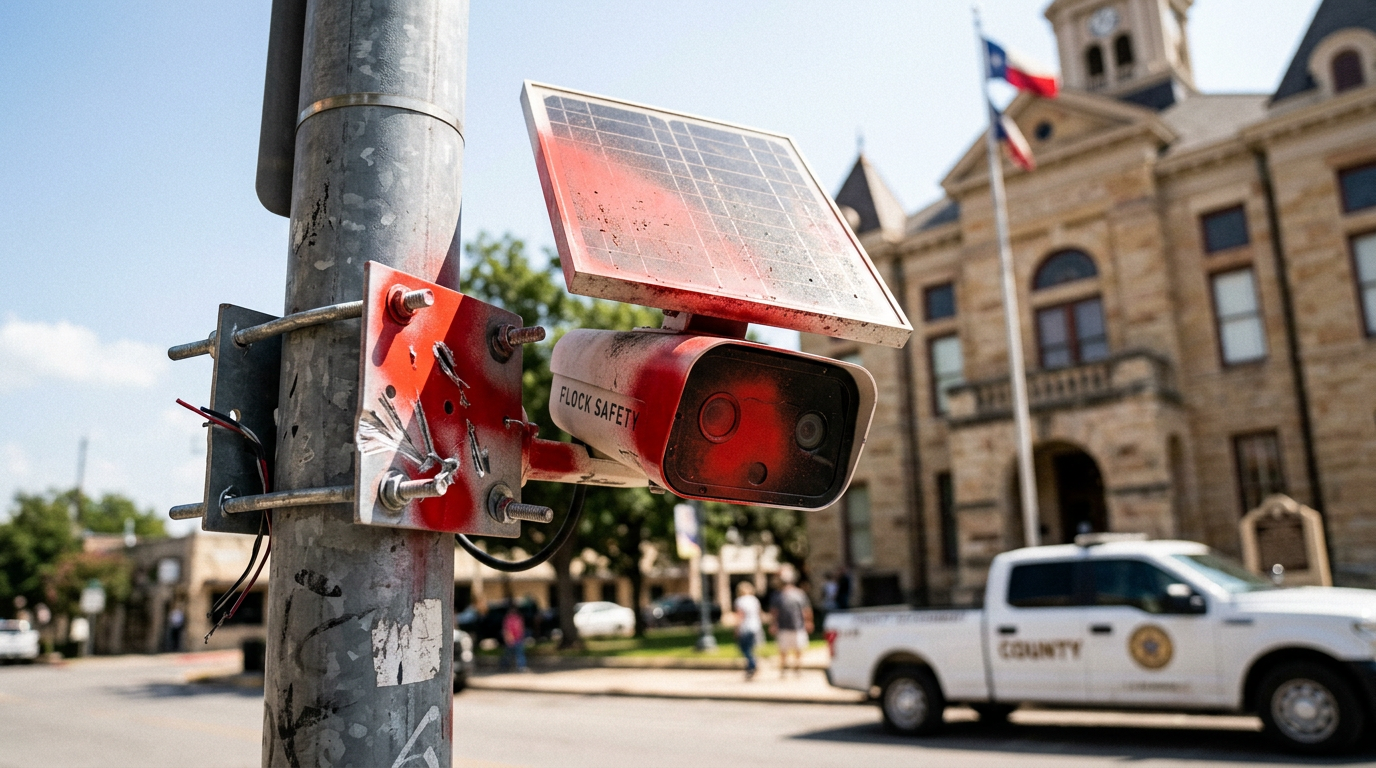
Flock Safety is facing mounting local opposition in Texas as counties, municipalities and residents push to remove or limit the company’s AI-enabled license-plate readers from public streets and community safety programs.
On Aug. 24, 2026, the Texas Tribune reported a wave of contract cancellations and protests across multiple Texas counties that critics say reflect growing alarm about mass surveillance, data sharing with law enforcement and the use of automated license-plate recognition (ALPR) systems. The reporting documents vandalism of cameras in some communities and notes that Flock Safety has publicly shortened promised data-retention periods as it attempts to blunt criticism.
Flock Safety positions its networked cameras and plate-reading algorithms as tools for crime reduction and vehicle recovery, selling hardware, software and data-access agreements to local governments and homeowners associations. The company says it has implemented changes—including shorter retention windows—to respond to community concerns, and that access controls and audit logs govern law-enforcement queries. Local officials quoted in the reporting, however, told the Tribune they are weighing the costs and legal complexity of removing systems already embedded in public-safety workflows.
The controversy in Texas underscores a broader national pushback against automated surveillance technologies. Across the US, municipalities and colleges have paused or cancelled deals for facial recognition and ALPR products amid privacy advocacy campaigns, litigation threats and new state- and city-level ordinances that restrict biometric collection and data retention. For vendors that supply equipment to public agencies, the market is increasingly politicised: procurement now carries reputational as well as fiscal risk.
For employers, the fallout has practical consequences. Where Flock and similar cameras are sited near workplace parking lots, shuttle stops or commuting corridors, workers and unions have raised worries about continuous location tracking, disproportionate impacts on certain communities and unclear boundaries between public-safety data and employer surveillance. Human-resources leaders contracting with municipalities for employee parking or operating private lots with ALPR systems will need to reassess privacy notices, access controls and collective-bargaining obligations tied to monitoring of employees’ movements.
The Texas Tribune’s reporting also highlights gaps in public information. While Flock Safety has described retention-policy changes, the company has not published comprehensive, independently verified bias-audit results for its license-plate recognition models, nor has it made fully transparent the scope and duration of law-enforcement queries across its client base. Counties that have moved to cancel systems report legal and technical hurdles—such as contractual exit fees, data-transfer mechanics and the embedded nature of camera networks—that the public accounts do not fully clarify.
That combination of opaque practices and tangible community resistance is likely to reverberate beyond Texas. Vendors that rely on public-sector contracts will face increased pressure to spell out auditability, third-party oversight and straightforward termination terms. Employers who host or rely on nearby ALPR infrastructure should anticipate worker concerns entering HR discussions, bargaining agendas and privacy-impact assessments.
As local debate shifts from abstract privacy theory to broken cameras and cancelled contracts, the market for place-based surveillance is poised for change. Whether that change takes the form of tighter contractual safeguards, regulatory limits or retreat from public-facing deployments will determine how—and whether—license-plate readers remain a routine part of community-safety toolkits and the workplace environments that intersect with them.