EU unveils €5bn Scaleup Europe Fund to keep tech talent
Commissioner Ekaterina Zaharieva announced a €5bn Scaleup Europe Fund and an ERA Act timeline to boost researcher mobility and retain AI talent in Europe.
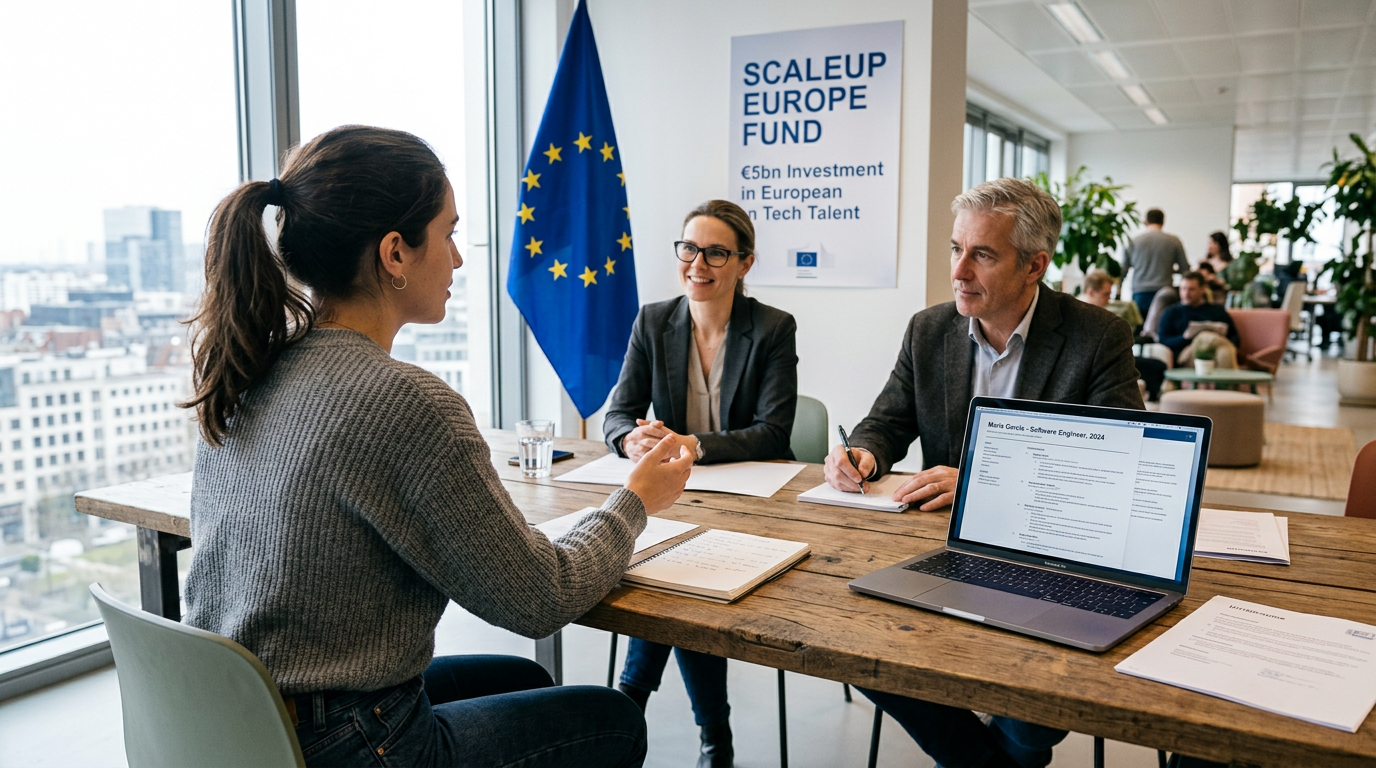
European Commissioner Ekaterina Zaharieva concluded a country visit to Portugal on 17 July 2026 and outlined a package of EU measures aimed at keeping tech talent in Europe, including a €5 billion Scaleup Europe Fund and a timetable for the ERA Act to ease researcher mobility.
Zaharieva said the Scaleup Europe Fund will be launched in autumn 2026 and will be managed by investment firm EQT, while the European Research Area (ERA) Act is scheduled for adoption in the second half of 2026. The announcements form part of a broader push by the Commission to reduce regulatory fragmentation across member states and bolster the continent’s capacity to scale tech and AI businesses.
The €5bn vehicle is positioned as a pan‑European growth capital pool to support fast‑growing companies, with an explicit aim of making it easier for European scale‑ups to access late‑stage funding at home rather than seeking capital abroad. The Commission framed the initiative as a response to talent drain and a gap in later‑stage financing that has pushed some founders and researchers to relocate outside the EU.
Zaharieva linked the financing move to mobility reforms under the ERA Act, saying streamlined recognition of qualifications and clearer rules for cross‑border researcher contracts would make it simpler for researchers and engineers to work across EU states. She argued that smoother mobility and harmonised rules are essential to keep universities, start‑ups and scale‑ups competitive within Europe’s single market.
For HR leaders and talent teams, the twin announcements touch two persistent pain points: the supply of senior technical hires and the capital environment that shapes hiring demand. If the Scaleup Europe Fund deploys as the Commission anticipates, it could increase headcount growth opportunities in late‑stage AI and software firms based in the EU. Likewise, reduced administrative friction on researcher recognition could accelerate cross‑border transfers and short‑term project hiring between member states.
The package reflects a wider EU push over the past three years to shore up homegrown tech capacity as regulators and policymakers seek to balance competitiveness with tighter rules on AI and digital markets. Brussels has moved from rule‑making to more active market‑shaping — pairing regulation with targeted financing and structural reforms — as part of a strategy to keep talent, intellectual property and high‑value jobs within the bloc.
What wasn’t disclosed in Zaharieva’s announcements were the operational specifics HR teams and legal departments will need: the criteria EQT will use to allocate capital, precise timelines for fund closings or capital calls, and whether the Scaleup Europe Fund will include strings on governance, diversity or worker‑retraining commitments. The ERA Act timetable is clearer at the high level, but the Commission did not publish detailed provisions on mutual recognition processes, employer obligations for posting researchers, or transitional measures for national systems.
Those unanswered questions matter for employers planning hiring strategies or restructuring around AI projects. Without clearer rules on researcher employment status, social protections and cross‑border taxation, companies could still face barriers when moving teams between member states. Funding that targets scale‑ups will raise demand for senior engineers and product leaders, but HR leaders will need visibility on eligibility and deployment plans to anticipate recruitment surges.
Looking ahead, the twin moves signal that Brussels views capital availability and labour mobility as levers to shape the EU’s AI labour market rather than purely regulatory endpoints. For HR professionals, the coming months will be about watching the fund’s launch mechanics and the ERA Act’s implementing texts: those details will determine whether more skilled AI workers actually stay in—or relocate to—European firms, and how employers must adapt contracts, onboarding and compliance to a more mobile research workforce.