European Commission opens calls for seven EU AI 'gigafactories'
The European Commission has opened tenders for up to seven AI 'gigafactories' to boost model development, local AI jobs and skills across the EU.
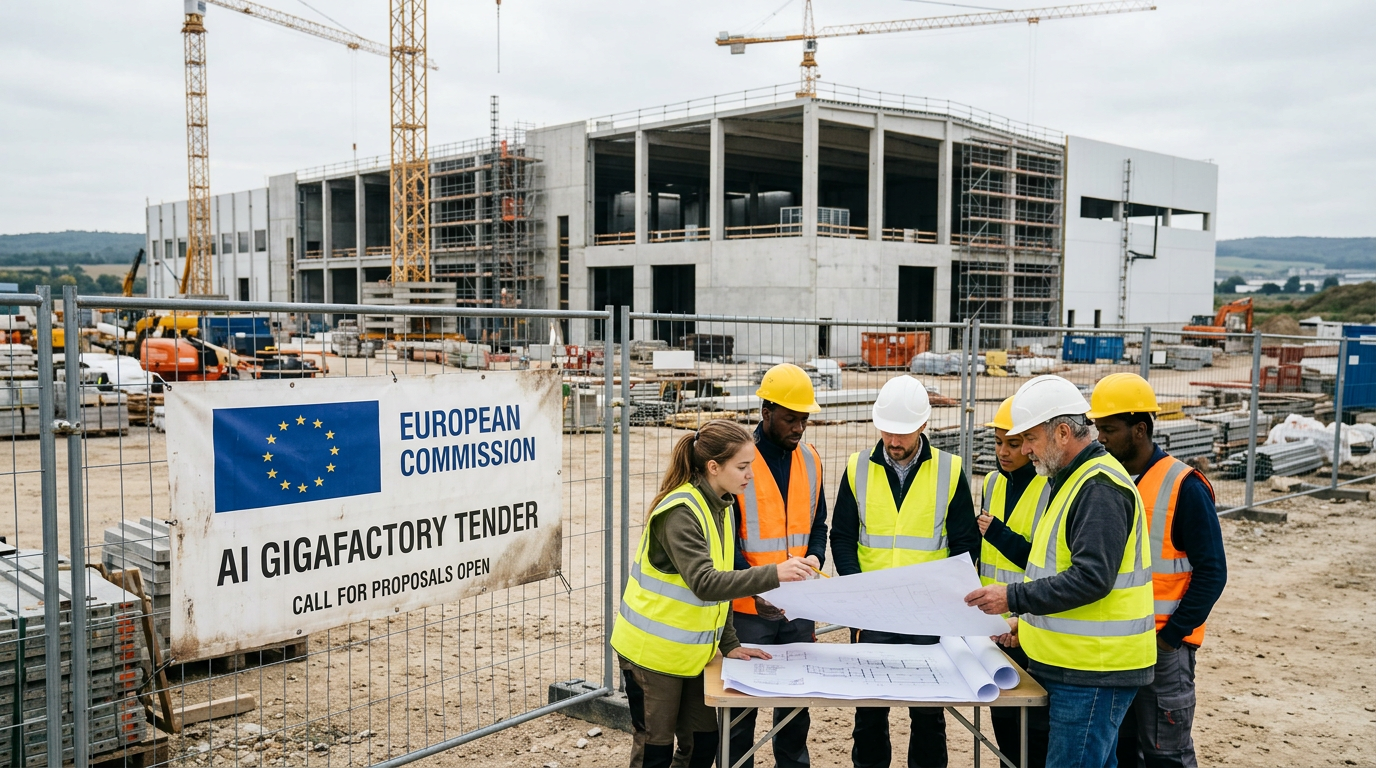
The European Commission has launched calls for tenders to create up to seven AI “gigafactories” across the bloc, aiming to build capacity for model development, testing and skills development that employers and HR teams will rely on.
In June 2024 the Commission opened the procurement process for the initiative, which it positions as a network of large-scale facilities that will host computing infrastructure, engineering teams and testing environments for advanced AI models. The Commission says the programme is intended to accelerate local model development and create engineering jobs within Member States while providing secured environments for testing and skills training.
Commission officials frame the gigafactories as an infrastructure layer for Europe’s AI ecosystem rather than commercial cloud offerings. The facilities are intended to support “model engineering, testing, validation and skills development,” the Commission says, and to ensure that companies and public-sector organisations have access to localised environments for experimenting with and deploying AI models.
For HR and people-analytics leaders the promise is pragmatic: a pipeline of local AI engineering roles, access to testing environments for internal tools, and opportunities for reskilling programmes linked to concrete infrastructure and employer demand. Employers that build people-analytics stacks or customised models could tap these sites for validation and compliance testing, reducing reliance on non-EU model providers for sensitive workforce data.
The launch reflects a wider EU push to reduce strategic dependencies on foreign AI infrastructure and to build skills domestically. The move follows months of policy activity from Brussels on AI governance, investment under the bloc’s digital programmes and strategic funding to scale up research and industrial capacity. For HR teams, that policy backdrop means potential new partnerships with public or semi-public facilities, and new local hiring markets for AI engineering, data science and governance roles.
What the Commission has not disclosed in detail will matter to employers deciding whether to engage. The initial call for tenders and accompanying material do not specify final budgets per site, firm timelines for selection and operation, pricing or access rules for private employers, nor the precise compliance, auditing and bias-testing standards that will govern model development at the facilities. It is also unclear how intellectual property generated at the gigafactories will be allocated, or whether smaller firms and HR tech vendors will be able to buy capacity on equitable terms.
The Commission’s plan raises design questions about procurement criteria and governance. HR teams that handle sensitive personnel data will want independent auditing and clear guarantees on data protection, provenance and model transparency before using outputs from any public-backed facility. Labour-market implications will also depend on how Member States route funding and whether they prioritise training pipelines that feed local employers.
Looking ahead, the gigafactory tender process could reshape where and how employers procure model development and validation services. If the Commission follows through with operational sites, talent flows into AI engineering jobs may become more geographically dispersed across the EU, and people-analytics teams could gain access to localised model testing environments — provided the outstanding questions on access, oversight and standards are resolved. For HR leaders planning recruitment, reskilling and people-analytics strategies, the project is a development to watch as it moves from procurement to operation.