Government updates Employment Rights Act 2025 timetable
Government published an updated timetable for the Employment Rights Act 2025 on 7 Aug 2026; key dates affect balloting, tribunal time limits and unfair-dismissal reforms.
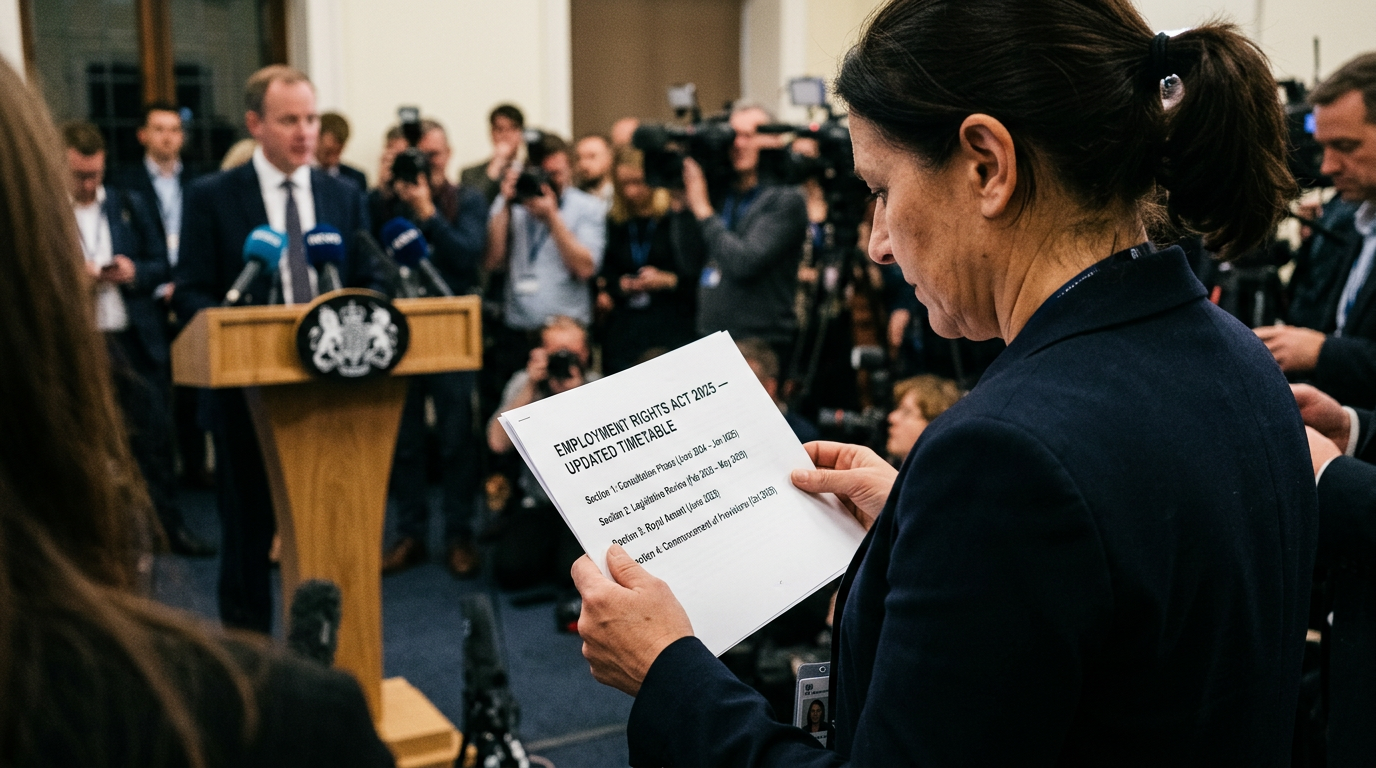
The government published an updated implementation timetable for the Employment Rights Act 2025 on 7 August 2026, legal advisers Wrigleys said. The timetable sets firm near-term dates for measures that will reshape collective consultation, tribunal exposure and trade-union processes.
Wrigleys, in a client note published 21 August 2026, lists the immediate milestones employers need to plan for. Electronic and workplace balloting provisions are due to come into force from 25 August 2026; from 1 October 2026 new causes of action will carry an extended Employment Tribunal claim time limit — increasing from three to six months; further trade-union reforms and new statutory workplace-harassment protections are slated for 30 October 2026; and the most significant unfair-dismissal and dismissal/re-engagement protections will be phased in from January 2027.
The move to allow electronic and workplace balloting from 25 August changes the mechanics of collective action. Wrigleys notes employers and unions will need to update processes for recognition and strike ballots, and businesses that have previously relied on paper-only ballots should expect faster, digitally enabled vote timetables and challenges over compliance with the new rules. HR teams handling collective consultations will have to reconcile digital verification requirements with existing privacy and data-retention practices.
Extending tribunal claim windows to six months for new causes of action from 1 October raises immediate exposure for employers. Longer limitation periods typically increase the likelihood of claims surfacing after negotiations or redundancy programmes conclude; Wrigleys warns that this will affect settlement strategy, risk modelling and provisions for potential liabilities. The firm advises employers to revisit settlement offer timing and documentation to ensure records will stand up over a longer review period.
The 30 October tranche — described by Wrigleys as a mix of trade-union reforms and fresh harassment protections — will further alter the landscape for industrial relations and workplace conduct policies. While the firm does not set out the full legislative text in its note, it says employers should expect changes to recognition and bargaining processes alongside new statutory duties on employers to prevent and address harassment.
Phased measures from January 2027 include expanded unfair-dismissal protections and constraints on dismissal/re-engagement practices. Wrigleys says these are likely to affect restructuring timelines, particularly collective redundancies, where the bar for lawful dismissals and permitted re-engagement offers will be higher and more prescriptive.
The updated timetable comes amid a broader push to recalibrate worker protections and industrial relations in the UK. HR teams have faced a string of statutory changes in recent years that increase procedural obligations on employers, and advisers say the Employment Rights Act timetable continues that trajectory by linking digital-process reform (balloting) with longer liability windows and substantive employment protections.
What the government has not published alongside the timetable is the granular regulatory scaffolding employers typically need. Wrigleys highlights a lack of detailed transitional guidance on enforcement, model procedures for electronic balloting, and specific codes or templates that would help firms operationalise the new duties. That absence means many employers must make practical decisions about processes and resourcing without statutory guidance, increasing reliance on external counsel and trade-union negotiation in the near term.
For HR leaders the calendar is now fixed and urgent: digital balloting, extended tribunal windows and phased dismissal protections will require updates to payroll and case-management systems, revised consultation plans and refreshed training for managers. As employment-law protections lengthen and digitisation accelerates, people teams will need clearer audit trails and governance controls — and they will have to coordinate those changes with legal advisers to manage the elevated litigation and collective-risk profile the timetable creates.