EEOC advances NPRM to overhaul federal complaint process
The EEOC on Aug. 26 advanced a proposed rule to rewrite 29 C.F.R. Part 1614 and streamline federal-sector discrimination complaints; the NPRM is open for comment.
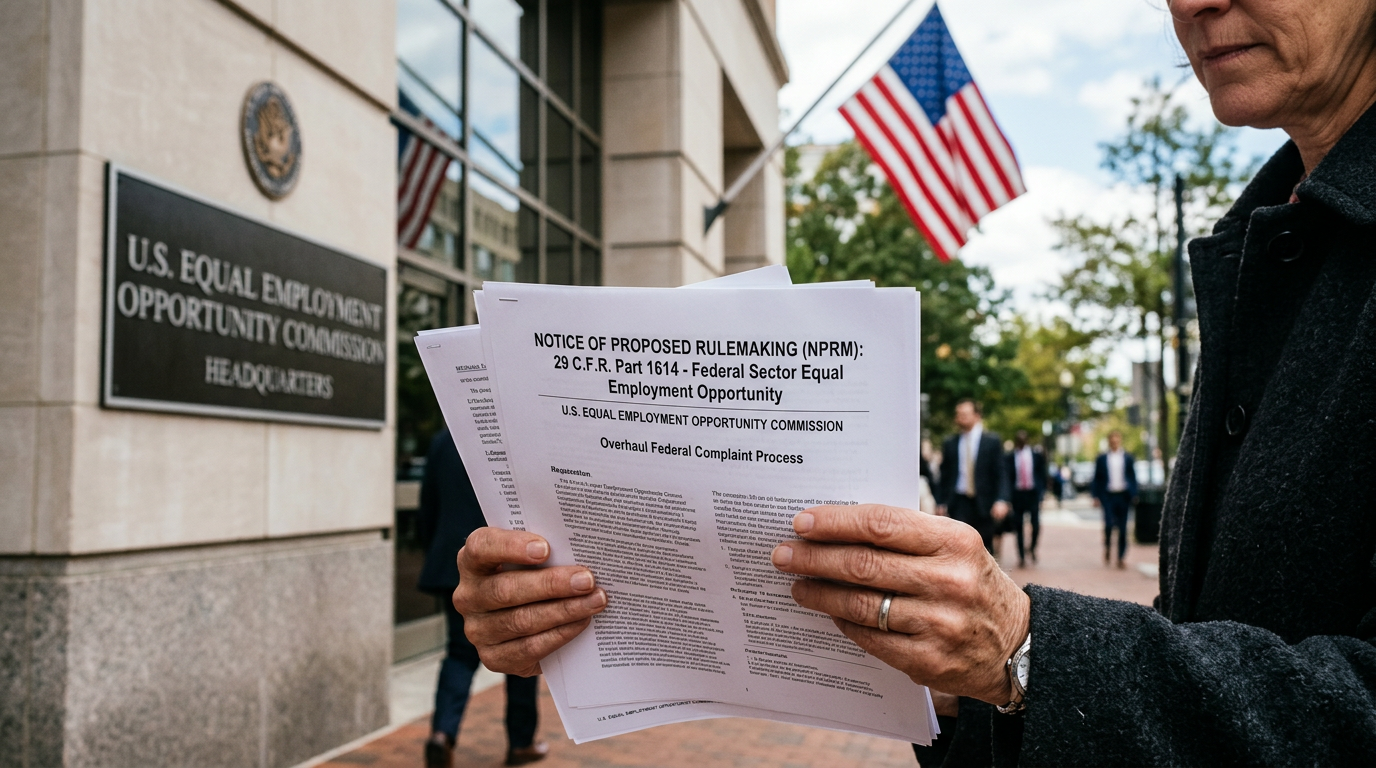
The U.S. Equal Employment Opportunity Commission voted Aug. 26 to advance a Notice of Proposed Rulemaking that would rewrite 29 C.F.R. Part 1614 and change how federal employees and applicants pursue discrimination complaints.
EEOC commissioners circulated an NPRM that would eliminate or significantly revise mandatory counseling and sharply narrow the use of full hearings, reserving them for a subset of cases the agency says warrant adjudication. The agency published the NPRM PDF and an accompanying agency announcement and opened the document for public comment.
Under the proposal, the commission aims to streamline initial intake and informal resolution steps that currently sit at the front end of federal-sector EEO claims. EEOC staff say the intent is to reduce delay and administrative layering in agency complaint systems, although the NPRM also moves several decision points and procedural gates that will change how claims advance to adjudication.
The NPRM’s timing is notable because the EEOC is already the federal regulator most visibly engaging with algorithmic and automated-decision tools. Employment law observers say procedural changes in Part 1614 could affect how federal-sector claims tied to AI-driven hiring, surveillance, or personnel decisions are handled — from whether such claims are routed into early resolution to whether they will qualify for hearings where evidentiary records are developed.
Trade coverage of the action appeared the same day, with SHRM reporting the commission’s proposed revisions and highlighting the potential for faster administrative processing if the changes are adopted. EEOC leadership framed the rewrite as an effort to modernize a decades-old regulatory framework and to make agency procedures more efficient for claimants and federal agencies alike.
Context for the move draws on two trends shaping workplace enforcement. Regulators across Washington have sought to cut procedural delay in administrative systems while also juggling an uptick in complex discrimination allegations tied to new workplace technologies. At the same time, agencies face pressure to prioritize cases with the most serious or precedent-setting legal issues, which is reflected in the NPRM’s approach to narrowing hearings.
What the EEOC did not disclose in its initial materials is a clear timeline for finalizing the rule beyond the public comment window, or how the commission will resource changes that could shift workload from agency EEO counselors and investigators to other parts of the system. The notice also leaves open how the agency will determine which cases are eligible for hearings under the new standard and whether existing backlogs will be reduced or simply redistributed across different procedural tracks.
Federal HR offices and agencies that manage EEO programs should expect operational impacts if the NPRM becomes final. Changes to mandatory counseling and early resolution timelines would alter how agencies train EEO counselors, log and triage complaints, and collect documentation — a shift that could be especially consequential for cases involving opaque automated systems, where early fact-gathering can be critical.
The EEOC’s NPRM sets a public comment period and invites stakeholders — including federal employees, agency EEO programs, unions, and employers — to weigh in before the commission moves to a final rule. For employers and HR leaders who steward or interact with federal workforces, the proposal is a reminder that procedural rules governing discrimination claims can reshape not only legal risk but also ordinary recordkeeping and technology governance practices in increasingly automated workplaces.