HRreview: AI is exposing, not breaking, job interviews
HRreview analysis argues generative AI reveals long‑standing hiring weaknesses and calls for structured interviews, staged assessments and post‑hoc audits.
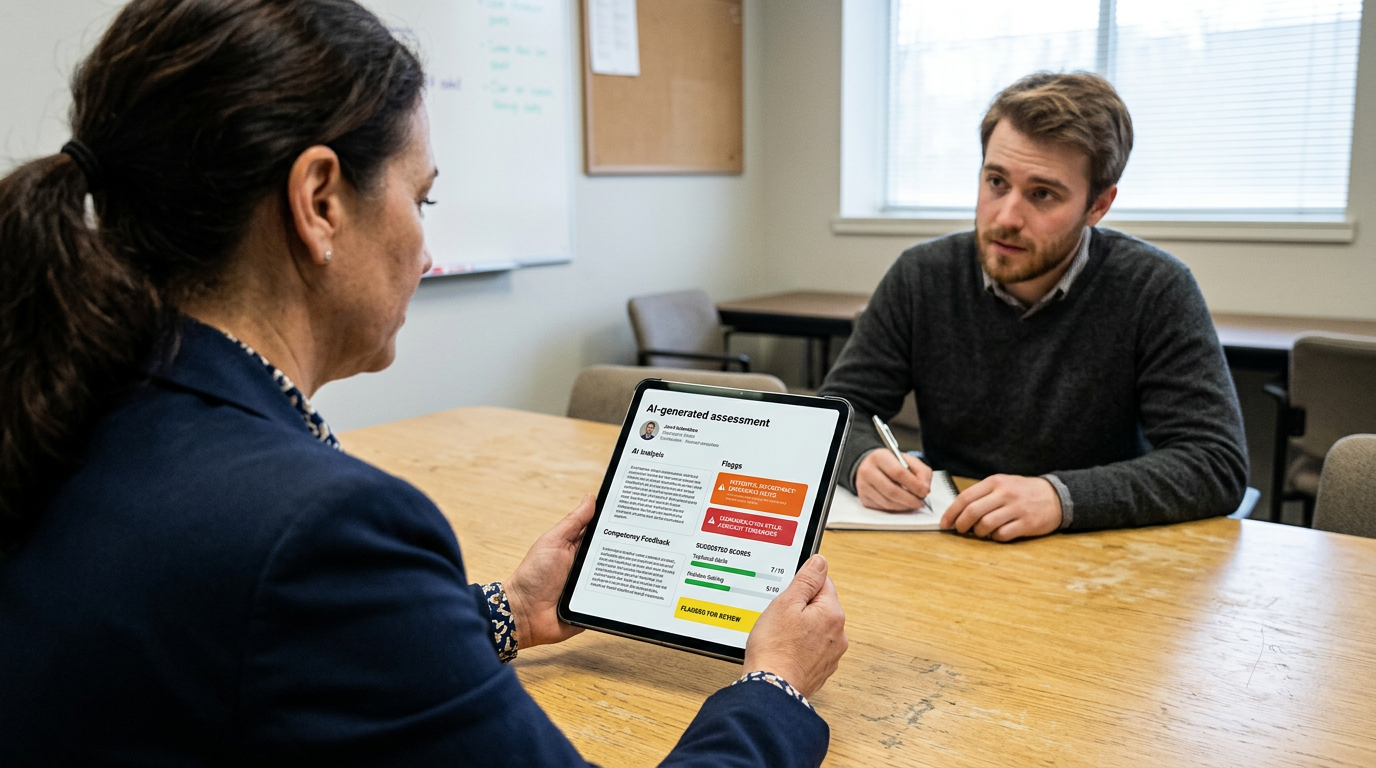
HRreview columnist Sebastian Reiche argues generative AI is not so much 'breaking' the job interview as exposing long‑standing weaknesses in how organisations design hiring and selection, and he calls for more structured, verifiable processes to close those gaps.
In a 23 July 2026 analysis, Reiche says the rise of large language models and other generative tools has made visible faults that already existed: unstructured interviews, inconsistent assessment criteria and a lack of verifiable records that hiring panels can rely on. The piece recommends staged assessments that can validate outputs that may have been assisted by AI, tighter structure to interview questions and mandatory post‑hoc audits of decisions so organisations can demonstrate how a hire was made.
Reiche frames the problem as a design and governance issue rather than a simple policing challenge. When interviews are loosely organised and evaluative criteria are applied inconsistently, he writes, the arrival of easy‑to‑use generative tools simply magnifies those weaknesses by enabling answers that sound plausible without being verifiable. Structured interviews, standardised scoring rubrics and tasks that generate artifacts amenable to verification—code exercises, timed written responses, or filmed presentations—would reduce the ability of unverified AI‑assisted work to distort outcomes, he argues.
The analysis also presses employers to build audit trails. Reiche suggests that employers retain records linking candidate responses, interviewers' scores and any AI assistance disclosed or detected, so that internal or external auditors can review decisions after the fact. That approach, he says, would allow organisations both to defend hires and to identify patterns of bias or inconsistency in selection practices.
The column arrives as talent‑technology vendors increasingly add generative features to sourcing, screening and interview workflows, and as regulators and data‑protection authorities sharpen scrutiny of automated decision systems. UK guidance on AI and data protection, for example, has emphasised the importance of transparency, risk assessment and documentation when organisations deploy automated tools in people decisions. The market impulse to adopt efficiency‑driving tools sits uneasily with the governance burdens Reiche highlights: design, measurement and audit create costs and operational complexity.
Reiche's prescriptions are practical in tone but short on operational detail. The analysis does not specify which metrics organisations should use for post‑hoc audits, how frequently audits should be carried out, or what level of independent third‑party validation would be sufficient. It also does not quantify the additional resource burden for smaller employers or outline how to treat undisclosed AI assistance detected after hiring. Those lacunae leave open difficult implementation questions for HR teams asked to translate the analysis into policy.
The piece is nevertheless a reminder that tools change faster than organisational practice. For HR leaders, the immediate implication is not simply policing candidate behaviour but rethinking assessment design: make interviews more structured, create verifiable staged tasks, and build the recordkeeping and audit capacity to show how decisions were reached. As vendors push generative features and regulators press for documented safeguards, employers that treat interviews as engineered systems rather than ad hoc conversations will be better placed to manage both integrity and legal risk in the years ahead.