Aegis poll: nearly a third of finance staff 'very concerned' about AI
Aegis union poll finds 31.2% of finance members ‘very concerned’ about AI's job impact and only 38.5% were consulted before new technology was introduced.
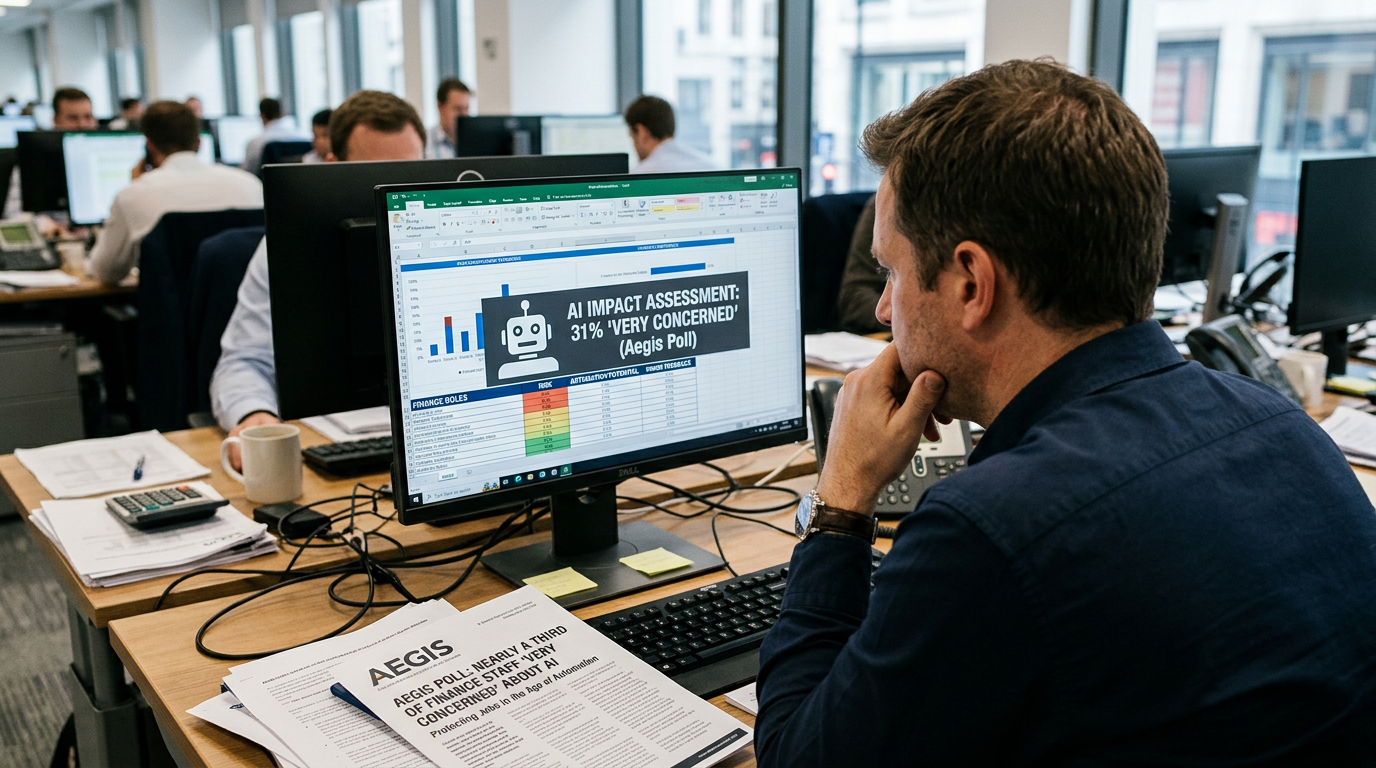
Aegis, the union representing finance-sector workers, has published the results of a member poll showing widespread anxiety about the impact of artificial intelligence and other new technologies on jobs and a low level of employer consultation over their introduction.
Reported in the Morning Star on 21 August 2026, the survey found that just over 85% of respondents said AI or other new technology had already been introduced in their area of work, while 31.2% described themselves as “very concerned” about how those changes could affect their jobs. The poll also found only 38.5% of members said they had been consulted by their employer before technology was brought in.
Aegis said it will share the findings with employers across the finance sector alongside a sector-wide charter calling for stronger worker involvement in how algorithmic systems and other new technologies are deployed. The union framed the charter as an attempt to secure formal consultation rights and clearer bargaining over technological change.
The results underscore a growing fault line between rapid technology rollout in financial services and worker engagement mechanisms. Banks and insurance firms have been among the earliest adopters of automated decision-making and process automation, and unions say those changes are increasingly a central bargaining issue as they reshape roles in operations, compliance and customer services.
“For members, the combination of rapid deployment and patchy consultation is producing real insecurity about job roles and career prospects,” Aegis told the Morning Star. The union has previously warned that without formal processes for staff input, algorithmic change risks worsening workloads and shifting responsibility for errors onto frontline employees.
The poll’s findings will feed into ongoing discussions between unions and employers about workplace governance for AI. Across the UK and Europe, policymakers and regulators have begun looking at workplace dimensions of AI governance—seeking to balance innovation with transparency, safety and employee rights—while trade unions have pushed for stronger procedural safeguards such as impact assessments, human oversight and agreement on redeployment or retraining.
The Morning Star article does not publish full methodological details for the poll: it does not state the sample size, response rate, the exact membership population polled, or the precise wording of the questions that produced the 31.2% and 38.5% figures. Aegis also did not disclose in the report how it plans to enforce the proposed charter or whether it will seek to make specific consultation rights part of collective agreements.
The union’s move to take the results to employers reflects a wider organising strategy that links technology change to collective bargaining leverage. Unions in several sectors have negotiated clauses giving them a formal role in technology assessments and rollout plans, and Aegis appears to be seeking similar standing within finance, using survey evidence to press for binding workplace rules rather than ad hoc consultation.
For HR leaders and in-house counsel, the survey reinforces the practical stakes of how firms introduce algorithmic systems: beyond technical governance and bias audits, workplace acceptance often hinges on communication, meaningful consultation and clear arrangements for training and redeployment. How employers respond to Aegis’s charter — whether through formal recognition of consultation mechanisms, trade‑off bargaining over automation-related redundancies, or rejection of binding terms — will shape bargaining dynamics as the sector’s technology footprint grows.
Source: Morning Star (21 Aug 2026) reporting Aegis union poll.