Acas publishes draft disciplinary and grievance Code
Acas has opened an eight‑week consultation on a draft update to its disciplinary and grievance Code, stressing early resolution, mediation and Equality Act adjustments.
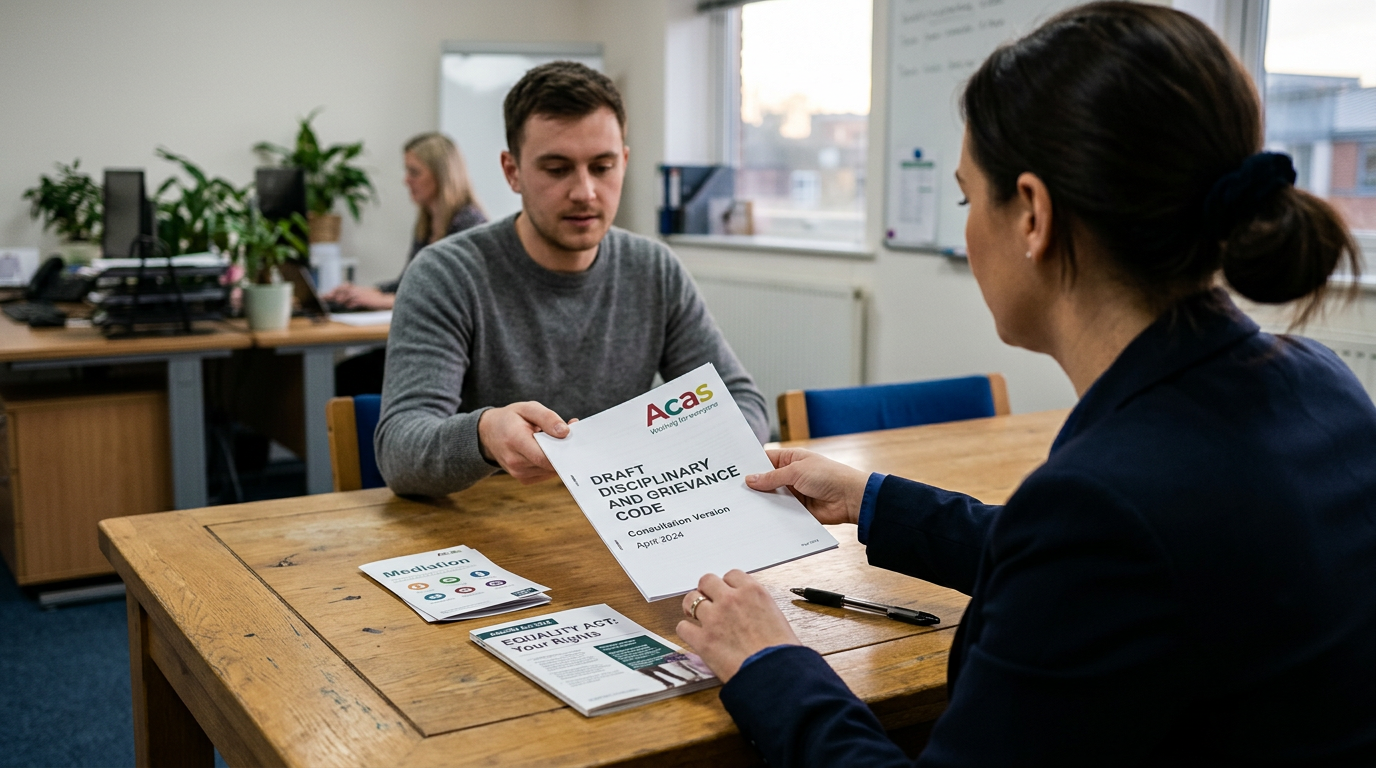
Acas has published a draft update to its statutory Code of Practice on disciplinary and grievance procedures and opened an eight‑week public consultation. The regulator says the proposals represent the first comprehensive revision of the Code since 2009 and are intended to promote earlier, less adversarial handling of workplace disputes.
In July 2026 Acas launched the consultation, inviting views on changes that include a stronger emphasis on informal resolution and mediation, clearer guidance on the use and review of suspension, and an explicit requirement that employers consider reasonable adjustments under the Equality Act 2010. The draft retains the Code’s statutory status and reminds employers that employment tribunals may take departures from the Code into account when deciding compensation.
The draft places early informal steps at the centre of the disciplinary and grievance process. Acas urges employers to try to resolve issues through informal discussion where appropriate and to consider mediation as a formal option before escalation. That approach is positioned as a way to reduce the need for formal hearings, though the draft also spells out when and how formal processes should begin if informal measures fail.
Suspension — long a flashpoint in disciplinary cases — receives more detailed attention. The draft sets out factors employers should weigh when suspending an employee, stresses that suspension should be proportionate and not a punitive default, and recommends regular review of any suspension decision. Acas says documentation of the reasons for suspension and clear review timetables are essential.
On disability and reasonable adjustments the draft is more prescriptive than previous guidance. Employers are told to identify and consider reasonable adjustments at the earliest practicable stage in disciplinary and grievance processes, and to record those considerations. Acas frames this as part of employers’ existing duties under the Equality Act 2010, not as a new separate legal test.
Employment lawyers and HR advisers have already flagged practical implications. Lawyers at Butcher Barlow note employers should review handbooks, update policy wording and train managers on the stronger mediation and adjustments guidance, warning that failure to follow the Code can influence tribunal remedies. Firms handling workplace disputes will also need to formalise how they record informal steps and any exploration of mediation to demonstrate compliance.
The revision follows a broader regulatory trend towards nudging organisations away from adversarial procedures and towards early dispute resolution. Over the last decade Acas has increasingly promoted mediation and workplace restoration as tools to reduce tribunal caseloads and legal costs, and the draft mirrors similar moves by other UK regulators to focus on proportionality and fairness in process.
What the draft does not set out is a firm timetable for coming into force or detailed templates for compliance. Acas’s consultation material does not mandate mediation, specify minimum training standards for those delivering mediation, or prescribe a single approach for documenting reasonable adjustments — leaving employers to decide how to operationalise the guidance. The draft likewise does not address how emerging HR technologies should be used when managing disciplinary or grievance records.
If adopted, the revised Code will require HR teams to tighten case management and record‑keeping and to give earlier, documented consideration to adjustments for disabled workers. For employers using digital casework tools, the change will raise questions about how systems capture informal steps, mediation outcomes and adjustment decisions — matters that sit at the intersection of process, compliance and workplace fairness as organisations try to reduce dispute risk without policing minor complaints into formal procedures.
Responses to the consultation will inform the final text; employers and advisers now have eight weeks to submit evidence and examples to Acas.