NY audit finds weak NYC enforcement of Local Law 144
A New York State audit found gaps in NYC's enforcement of Local Law 144; DCWP promised stronger oversight, raising compliance risk for employers and vendors.
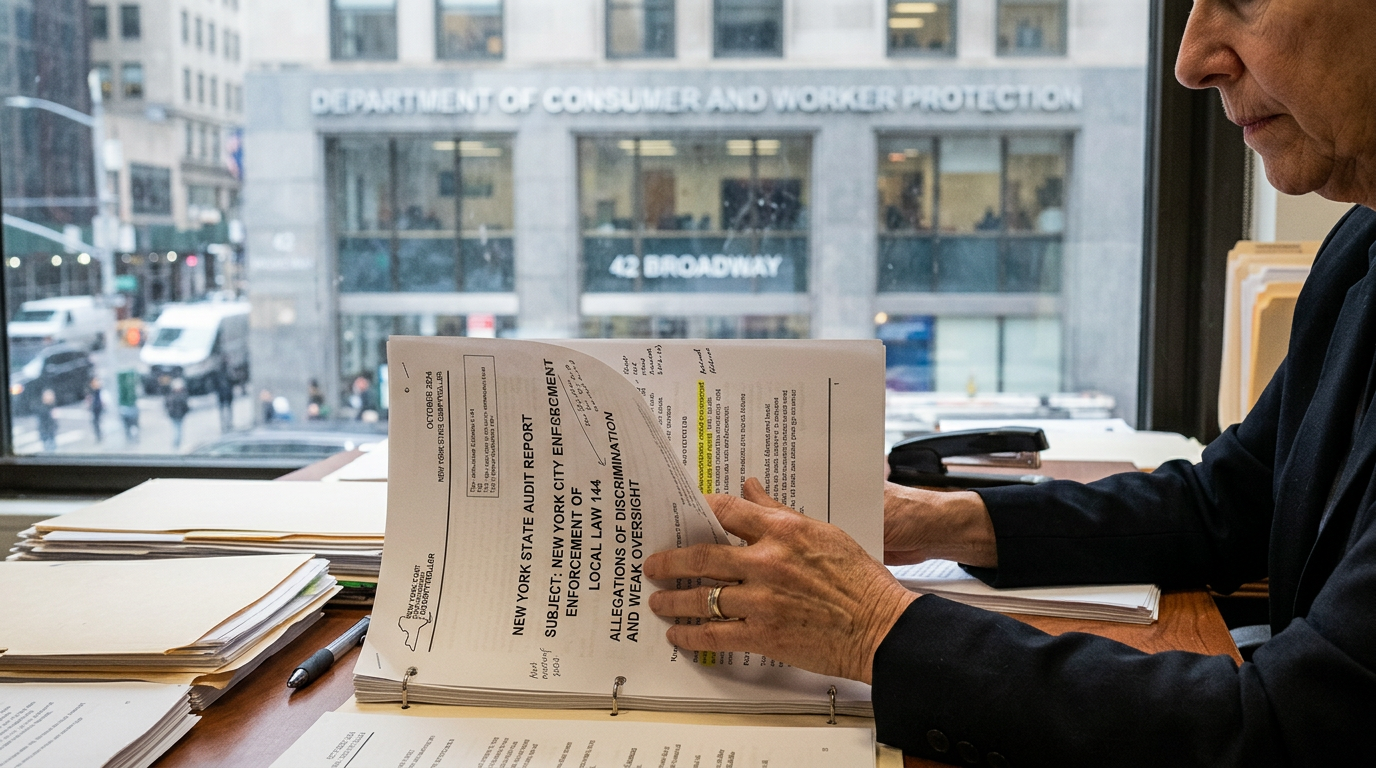
A New York State Comptroller audit has found significant gaps in the New York City Department of Consumer and Worker Protection’s (DCWP) enforcement of Local Law 144, the city statute that requires bias audits and notice for Automated Employment Decision Tools (AEDTs). The report flagged multiple compliance and complaint‑handling failures and prompted DCWP to commit to strengthening oversight.
The Comptroller’s office published the audit in 2026, documenting that DCWP had not consistently enforced the law’s requirements for notices and bias audits and had weaknesses in how it handled complaints from workers and applicants. The audit says those failures hampered the city’s ability to determine whether employers and vendors were meeting their obligations under Local Law 144 and to hold noncompliant parties to account.
The report identifies a pattern of shortcomings in DCWP’s implementation. According to the audit, the agency did not always verify that employers and vendors filed the required notices or made bias‑audit reports available, and its complaint‑tracking and investigative processes were uneven. The Comptroller also found that DCWP’s internal controls and recordkeeping limited its ability to oversee compliance effectively and to demonstrate whether follow‑up actions were taken when problems surfaced.
DCWP responded to the audit by committing to improvements. The department told the Comptroller it would enhance its oversight practices, including updating internal procedures, strengthening tracking of filings and complaints, and increasing outreach to regulated entities. DCWP said it would work to ensure bias audits and notices are more consistently monitored and that complaint handling is more timely and documented.
Local Law 144 requires employers and vendors that use AEDTs in hiring or promotion decisions affecting New York City residents to post notice, provide applicants with opt‑out information in some cases, and undergo third‑party bias audits for higher‑risk systems. The statute has been closely watched by HR teams and talent‑technology vendors because its compliance requirements apply to any system used with NYC residents — regardless of where the vendor or employer is based — making the law a practical enforcement lever for local regulators.
The Comptroller’s findings land against a backdrop of growing municipal scrutiny of automated decision tools. Advocates and legal observers have pushed for regular audits and transparent reporting; regulators in other jurisdictions have signalled similar interest in oversight. The audit increases the probability that DCWP will move from guidance and outreach toward more visible enforcement activity, a shift that would have consequences for U.S. employers and HR‑tech providers that recruit or evaluate candidates in New York City.
What the Comptroller’s report and DCWP’s commitments did not include was a clear timetable or specific enforcement thresholds. The audit does not set out how quickly the department will implement the promised process changes, whether it will expand staff or dedicate new resources to monitoring AEDTs, or whether it intends to pursue a higher volume of formal enforcement actions such as fines or orders. The report also leaves open how DCWP will vet the quality of third‑party bias audits or whether it will require particular audit standards.
For HR leaders and vendors, the audit is a practical warning: Local Law 144 is no longer purely theoretical compliance work. The Comptroller’s critique and DCWP’s pledge to shore up oversight signal that municipal enforcement risk is increasing. That shift will test organizations’ documentation, notice practices and vendor oversight, and it may accelerate broader demand for clear audit standards and defensible vendor-management practices around automated hiring tools.