EY urges firms to build capability ecosystems for human-AI co-evolution
EY says organisations should build capability ecosystems and continuous learning systems to drive the co-evolution of human and AI potential.
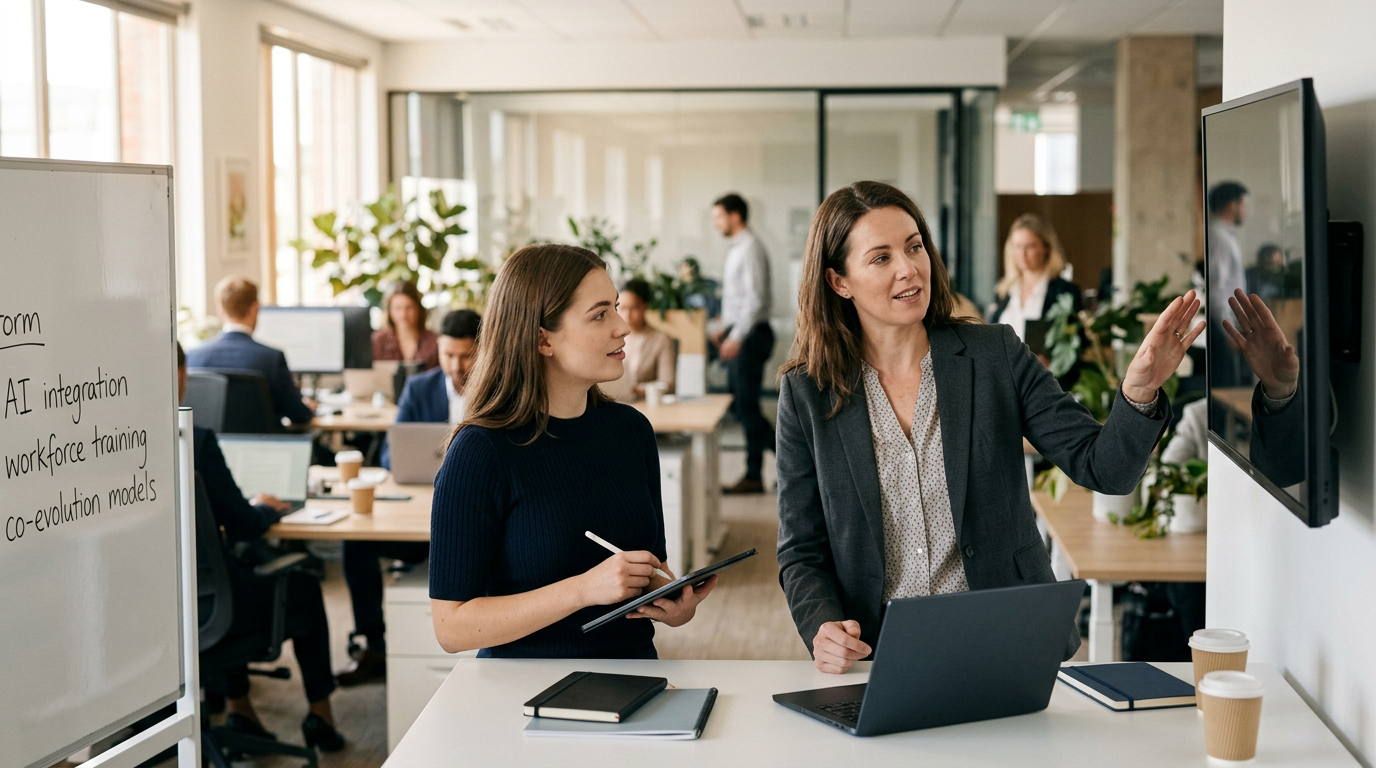
EY has urged organisations to adopt "capability ecosystems" that pair continuous learning with shared human-AI intelligence to drive workforce change, arguing that learning should be the engine of co-evolution between people and machines.
In a paper published in 2024 on its Megatrends site, the consultancy set out a model it calls "shared intelligence" and said businesses must move beyond treating AI as a set of point tools and instead design systems where human skills, AI models and organisational processes evolve together.
The firm argues capability ecosystems centre on three linked elements: modular skills and roles, persistent learning systems that update both people and models, and governance that defines rights, responsibilities and oversight across humans and algorithms. EY said these ecosystems require employers to think differently about talent architecture — hiring for skills that pair well with machine capabilities, creating learning paths that blend formal and on-the-job model interaction, and redesigning work to incorporate hybrid decision-making.
That approach reframes workplace learning from a periodic HR activity into a continuous feedback loop. The consultancy says learning should not only upskill people but also generate the data and human judgement needed to retrain and refine AI, so models improve in step with evolving human capabilities. For HR teams, EY positions this as a shift from workforce planning to capability orchestration: mapping where human strengths and model outputs should intersect and investing in the routines that keep both current.
The paper also highlights governance and accountability. EY recommends clear role definitions for who trains models, who validates outputs and how decisions involving AI are audited. It warns that without explicit governance, capability ecosystems risk entrenching bias, creating unclear liability, and eroding employee trust. The consultancy suggests firms embed explainability checks and human-in-the-loop controls into learning cycles so that both people and models are assessed for performance and fairness.
This recommendation dovetails with broader market moves. HR teams are already shifting toward skills-based hiring, continuous performance feedback and data-driven L&D; regulators in several jurisdictions are increasingly focused on AI transparency and workplace impacts. EY's proposal codifies those trends into a single operating concept that ties talent, technology and compliance into one design problem.
What EY did not specify is how organisations should measure the return on building capability ecosystems, nor did the paper provide concrete implementation roadmaps or third-party certification frameworks for auditing the human-AI learning loop. There is limited discussion of costs, timelines or customer case studies showing measurable improvements in outcomes such as productivity, retention or bias reduction. The consultancy's governance recommendations are high-level; detailed legal, privacy and labour-compliance implications will vary by jurisdiction and are left for companies to resolve.
For HR leaders, the paper signals a strategic pivot: treating learning budgets and talent architecture as investments in both people and machine intelligence. As businesses deploy more generative and decision-support models, the capability-ecosystem idea forces a reappraisal of who owns skills development, how performance is measured, and how workplaces preserve accountability when decisions are distributed across humans and algorithms.
If organisations adopt EY's framing, the consequence will be a different set of HR priorities — continuous learning design, tighter collaboration with data science and new governance roles — rather than one-off upskilling drives. That shift could reshape labour practices and employment law debates as work becomes a negotiated space shared between human judgement and machine output, with learning as the mechanism that binds the two together.